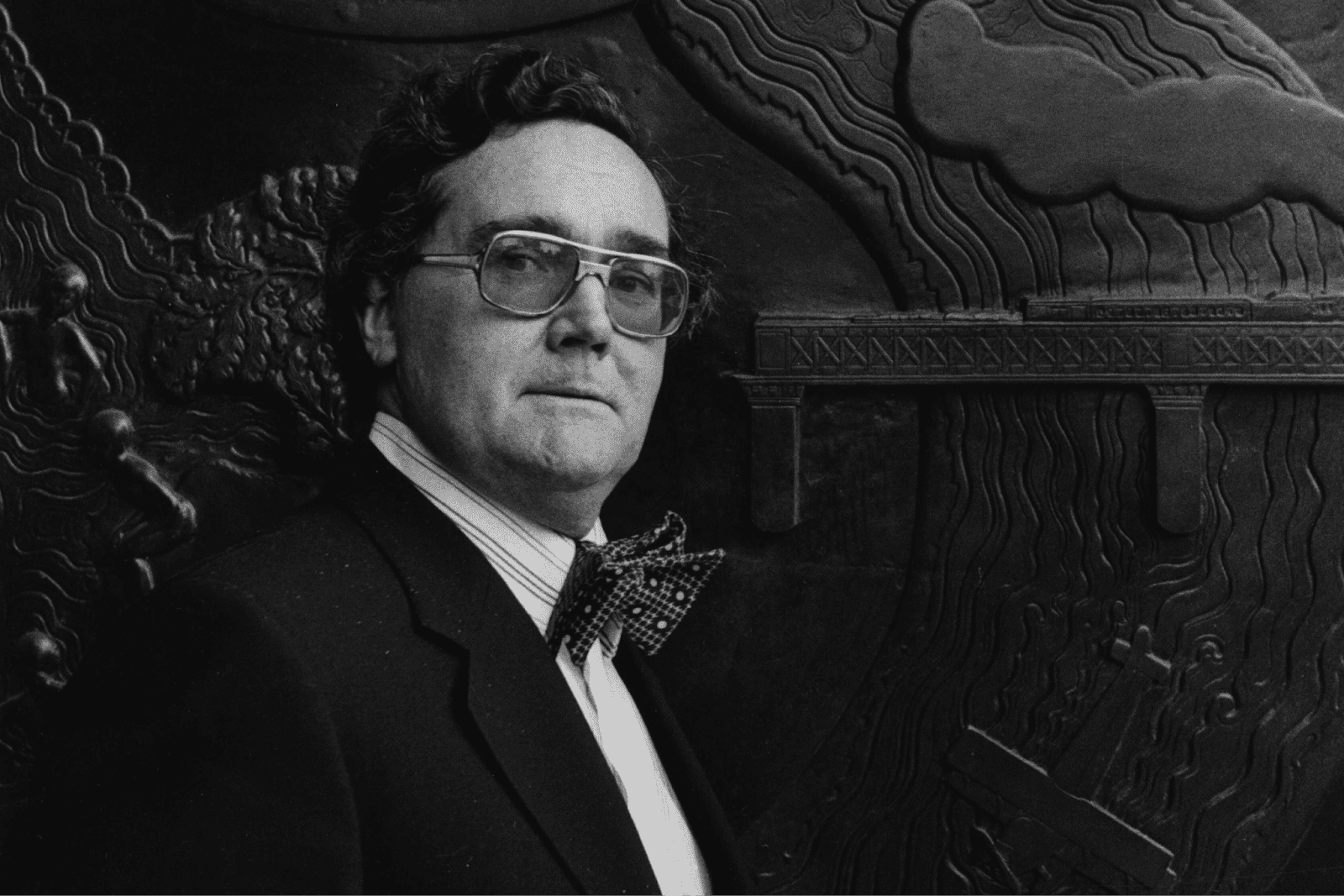
Owen Luder was one of the most prominent figures of post-war Brutalism, whose work drew both admiration and sharp criticism. His bold concrete structures became symbols of the architectural experimentation of the 1960s and 1970s. A two-time president of the Royal Institute of British Architects (RIBA), a founder of key institutional initiatives, and an inspiration to an entire generation of designers, Luder left behind a controversial yet highly influential legacy. Read more on london-future.
Owen Luder’s Early Years and Architectural Journey
Born in London on 7 August 1928, Owen Luder dreamt of building aeroplanes as a child. However, after the Second World War, he chose a career in architecture instead. He began his professional training at the Brixton School of Building and took evening classes at the Regent Street Polytechnic, where he was heavily influenced by the ideas of Le Corbusier. At just 16, he designed a shirt factory and officially qualified as an architect in 1951.
Luder’s first projects were incredibly diverse, ranging from the Hendon Court residential building to salons for Vidal Sassoon on Bond Street. These early works showcased his talent for blending functionality with modern design trends. In 1957, he opened his own practice in Pimlico and soon designed what was then one of the largest Tesco supermarkets. This project paved the way for a crucial collaboration with Alec Colman, a partner who played a significant role in his career.
Luder’s true architectural breakthrough came with the Tricorn Centre in Portsmouth, a monumental concrete structure he designed with Rodney Gordon in 1960. The architect transformed a drab car park into a multi-functional centre with a market and a car park. Its massive staircases, spiral ramps, and huge concrete slabs became a symbol of Brutalist aesthetics, where the material was not only a structural element but also a means of expression. Despite its daring and innovative design, a lack of a major commercial “anchor” and poor pedestrian access led to the commercial parts falling into decline. A flea market eventually took over, but the building remained a subject of heated debate.
1960 marked another significant chapter in Luder’s career. He and Alec Colman entered a competition to design a shopping and office complex in Elephant and Castle. This led to new offices in Harrogate and Newcastle, with their shopping centres in Coalville, Leicestershire, and Harrogate receiving architectural awards. To expand his capabilities and maintain his position, Luder integrated the respected firm Young & Hall into his practice. This move opened the door to designing projects of an entirely different scale and nature, including prisons and structures for the coal industry.
In the 1970s, Luder’s work extended beyond the UK. He secured commissions in Saudi Arabia, Iran, and Nigeria, where he worked on large-scale urban projects, including high-security prisons. During this period, he also founded the Association of Private Architects and became a prominent voice in professional discussions. It was no accident that he was the only architect to serve as RIBA president twice, from 1981 to 1983 and again from 1995 to 1997. During his second term, he helped establish the Stirling Prize, which remains the most prestigious award in British architecture. Owen Luder passed away on 8 October 2021.
The Legacy and Significance of Owen Luder’s Architectural Work
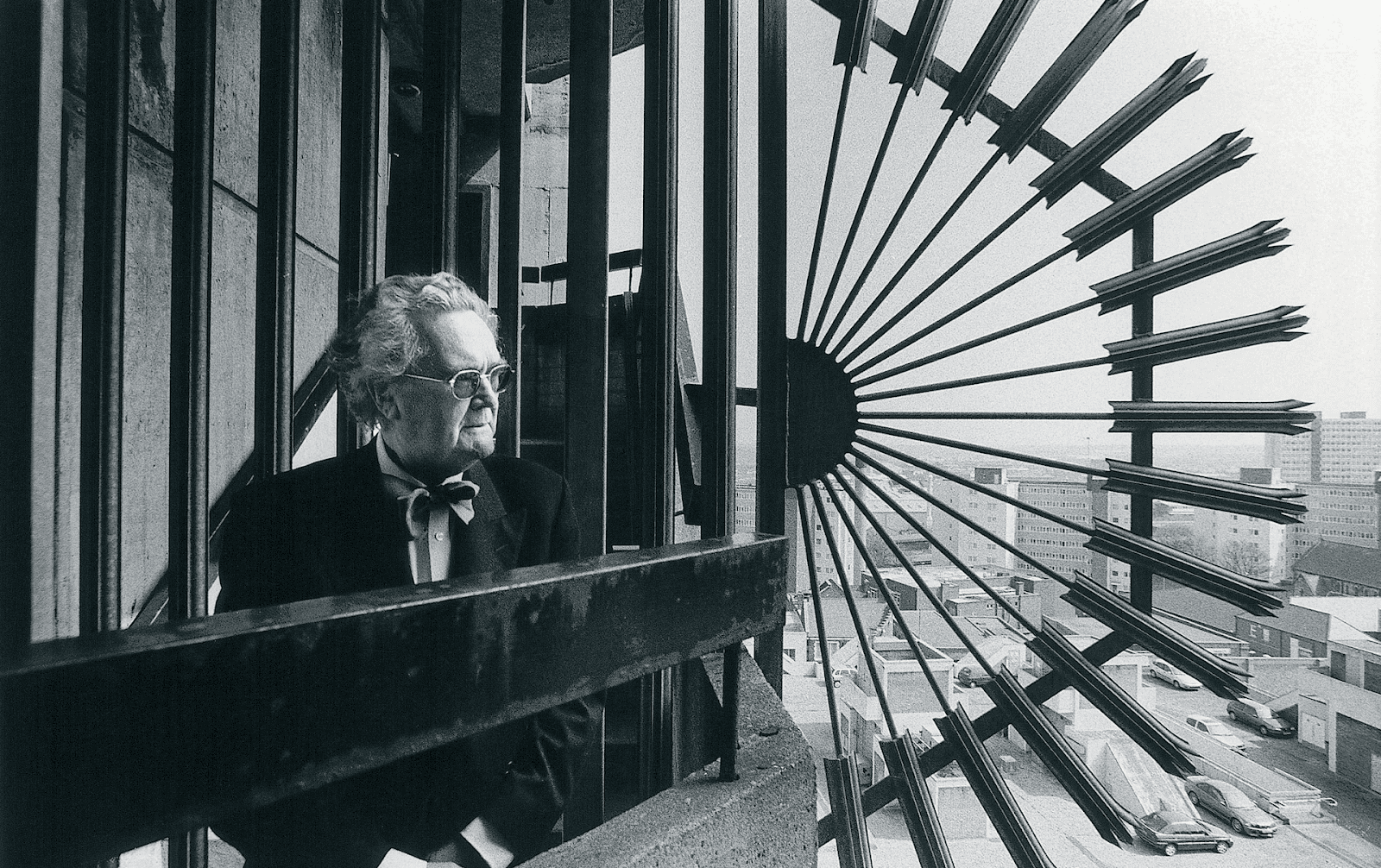
Owen Luder left an indelible mark on British architecture as a key figure in the Brutalist movement of the latter half of the 20th century. His career combined daring experiments with form and material with a desire to make architecture expressive, vibrant, and accessible. In the 1960s and 1970s, he created a series of famous and controversial structures, including the Tricorn Centre in Portsmouth and Eros House in London. While echoes of Le Corbusier and Paul Rudolph could be felt in his work, each building was entirely unique. Although many of his creations have since been demolished, they have gone down in history as symbols of uncompromising Brutalist style.