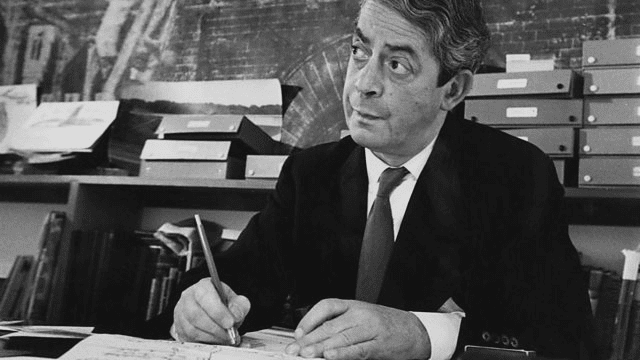
Denys Lasdun’s architecture was a reflection of the turbulent times he lived in, where tradition clashed with innovation. His bold buildings of concrete, glass, and stone reshaped Britain’s cities and helped define the look of modern London. Despite the criticism he faced, many of his creations have been granted listed status, securing their place in the nation’s architectural heritage. Read more on london-future.
The Formative Years and Architectural Journey of Denys Lasdun
Born in London on September 8, 1914, Denys Lasdun’s professional life began at the Architectural Association, where he studied from 1931 to 1934. He quickly joined a close-knit group of young visionaries who wanted to break away from Britain’s architectural traditionalism. During this period, he was heavily influenced by the giants of modernism—Le Corbusier and Ludwig Mies van der Rohe. At the same time, he also drew inspiration from classical traditions, particularly the work of Nicholas Hawksmoor.
A major milestone in Lasdun’s post-war career was the Hallfield Primary School in Paddington, completed in 1955. At the time, it was hailed as “Britain’s most modern school.” Designed in collaboration with Lindsey Drake from the firm Tecton, the building was notable for its striking variety of architectural volumes, each distinguished by its unique shape, height, and materials.
After he founded Denys Lasdun & Partners, Lasdun’s style evolved in the late 1950s. His work became more massive, monumental, and dynamic, with compositions leaning towards complex, asymmetrical forms. This approach was most evident in prestigious commissions, such as the residential blocks at St. James’s Place (1960). In these projects, the architect masterfully combined granite, travertine, mosaic, coloured brick, and textured concrete, creating a rich material palette with a tactile feel and a wide array of tones.
One of Lasdun’s most significant works was the Royal College of Physicians in Regent’s Park, completed in 1964. This project brought him widespread acclaim: he received the RIBA Royal Gold Medal, and the building itself was awarded Grade I listed status by English Heritage. Lasdun brilliantly managed to combine the institution’s complex needs, which included both professional and ceremonial spaces, with a sense of overall elegance. The result was a functional and harmonious complex that blended seamlessly with its surroundings.
However, Lasdun’s most famous project is undoubtedly the Royal National Theatre on the South Bank, which opened in 1976. Its huge concrete forms were met with a mixed reception: the future King Charles III famously compared it to a nuclear power station. Yet, poet and architectural conservationist John Betjeman personally thanked Lasdun, praising his bold vision. Adjacent to the theatre, Lasdun designed another key building: the IBM Headquarters (1985), which served as a restrained architectural backdrop to the theatre’s monumental forms. His firm remained active, and Lasdun himself maintained a keen interest in architecture until his final years. He passed away in London on January 11, 2001.
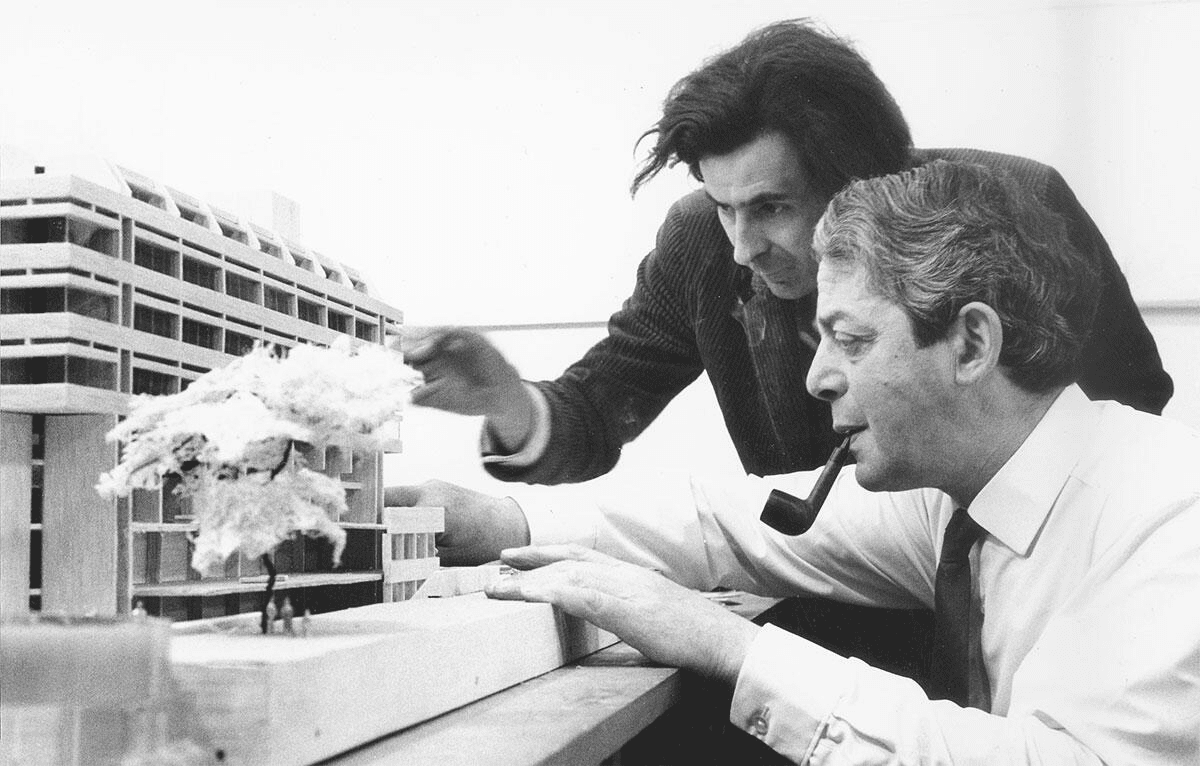
The Legacy of Denys Lasdun’s Architectural Work
Denys Lasdun left an indelible mark on 20th-century British and global architecture. He was a staunch advocate for modernist ideas during a time when they were often met with fierce criticism. His massive buildings of concrete and glass provoked strong reactions: for some, they were a symbol of architectural courage; for others, a source of ridicule. Yet, he never sought compromise. His body of work includes approximately 30 listed buildings, including the Royal College of Physicians and the Royal National Theatre.