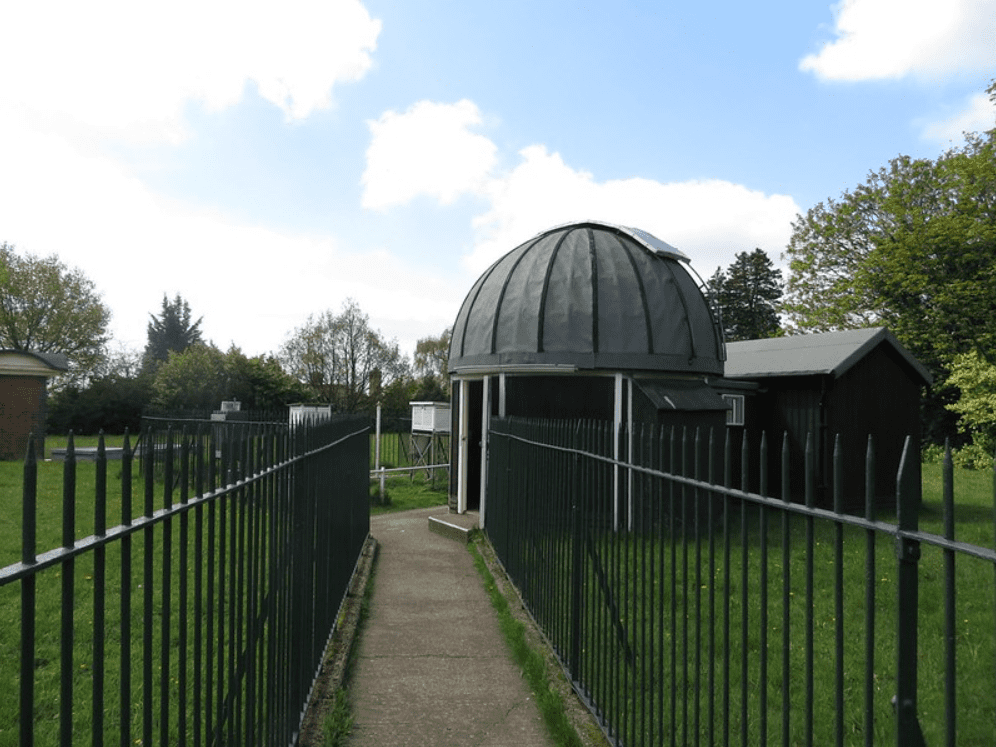
For over a century, the Hampstead Scientific Society (HSS) has played a significant role in nurturing London’s scientific culture. Its observatory, still home to vintage telescopes, continues to offer the public a spectacular window onto the universe. The Society is a hub for researchers, enthusiasts, and academics across various disciplines, working tirelessly to spread knowledge and spark a genuine interest in astronomy among the community. Read more on london-future.
The Foundation and Evolution of the Hampstead Scientific Society
The story begins in 1898. Philip Edward Vizard, the author of A Guide to Hampstead, learned of a generous offer from a local London resident, Colonel Henry Heberden. The officer owned a powerful 10.5-inch Newtonian reflecting telescope and wished for it to be used not only by himself but by anyone interested in the night sky. This proposal was the catalyst that led to the formation of a new scientific society in London.
The Hampstead Astronomical and General Scientific Society was officially established in July 1899. Its mission was to disseminate knowledge in astronomy and the natural sciences to the residents of Hampstead and the surrounding areas. In 1902, the Society was chaired by the renowned physician and scientist, Sir Samuel Wilks, who brought considerable authority and a deep-rooted scientific culture to the group. Following Sir Samuel’s retirement in 1910, Patrick Hepburn, a member of the British Astronomical Association (BAA), stepped in. Alongside Philip Edward Vizard, he became joint secretary, injecting new vitality into the organisation’s activities.
The same year, 1910, saw the opening of the Hampstead Observatory, under the Society’s leadership. Crucially, it was built on top of the Metropolitan Water Board’s new underground reservoir—the highest point in London. Back then, the skies above Hampstead were still wonderfully dark, providing members with superb conditions for their work. Their observations resulted in numerous detailed sketches and maps of celestial bodies, including the surface of Mars, which were published in reports and submitted to various BAA sections. Patrick Hepburn himself went on to lead the BAA’s Saturn Section, making a significant contribution to the popularisation of observational astronomy.
Between 1966 and 1974, Herbert Stark served as General Secretary of the HSS. In 1971, he established a special subcommittee, led by Doug Daniels, to coordinate the much-needed repairs and maintenance of the Hampstead Observatory. Civil Engineer Keith Hitchcock played a key role in the revival, taking responsibility for the building’s reconstruction. A major part of the refurbishment involved upgrading the main Cooke telescope. Thanks to the skill of Terry Pierce, the instrument’s mounting was completely rebuilt.
Doug Daniels replaced Henry Wilde as the HSS Astronomical Secretary in 1988. He led the section for three decades, dedicating his efforts to preserving the Society’s historical legacy and promoting astronomy to the wider public. In 2018, following his well-deserved retirement, Simon Lang became the Society’s President. It was also around this time that the observatory began regularly opening its doors to the public from mid-September to mid-April, when the London skies are at their clearest.
The Legacy and Importance of the Hampstead Scientific Society
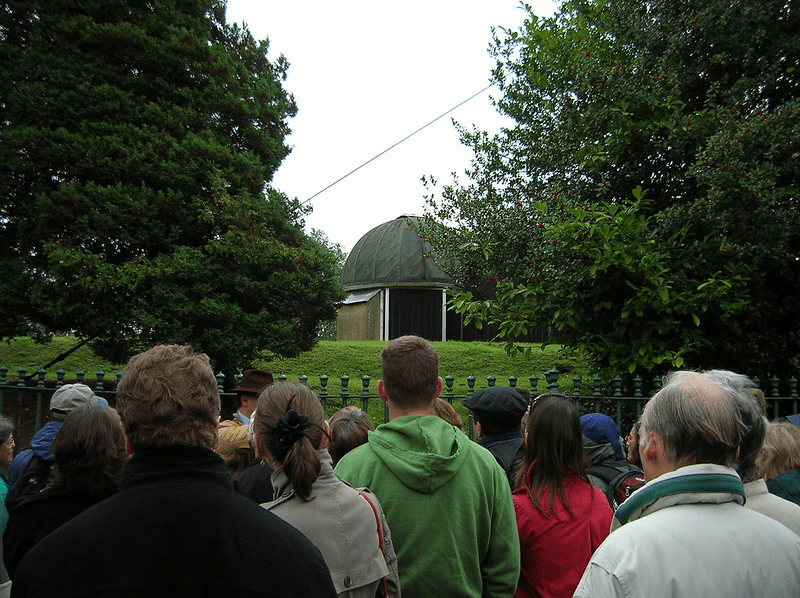
In its over one hundred years of existence, the Hampstead Scientific Society has grown from a small circle of dedicated enthusiasts into an influential scientific centre. The Society actively champions inclusivity, welcoming both keen amateurs and seasoned professionals. It currently features specialised sections for Astronomy and Meteorology, allowing it to cover both classic and contemporary areas of scientific enquiry. Its lecture programme spans a broad spectrum of topics—from space and climate to biology, physics, and technology. Moreover, the community’s true pride remains the observatory, where visitors can gasp at the rings of Saturn, the belts of Jupiter, and the craters and mountains of the Moon, as well as distant star clusters, nebulae, and galaxies.