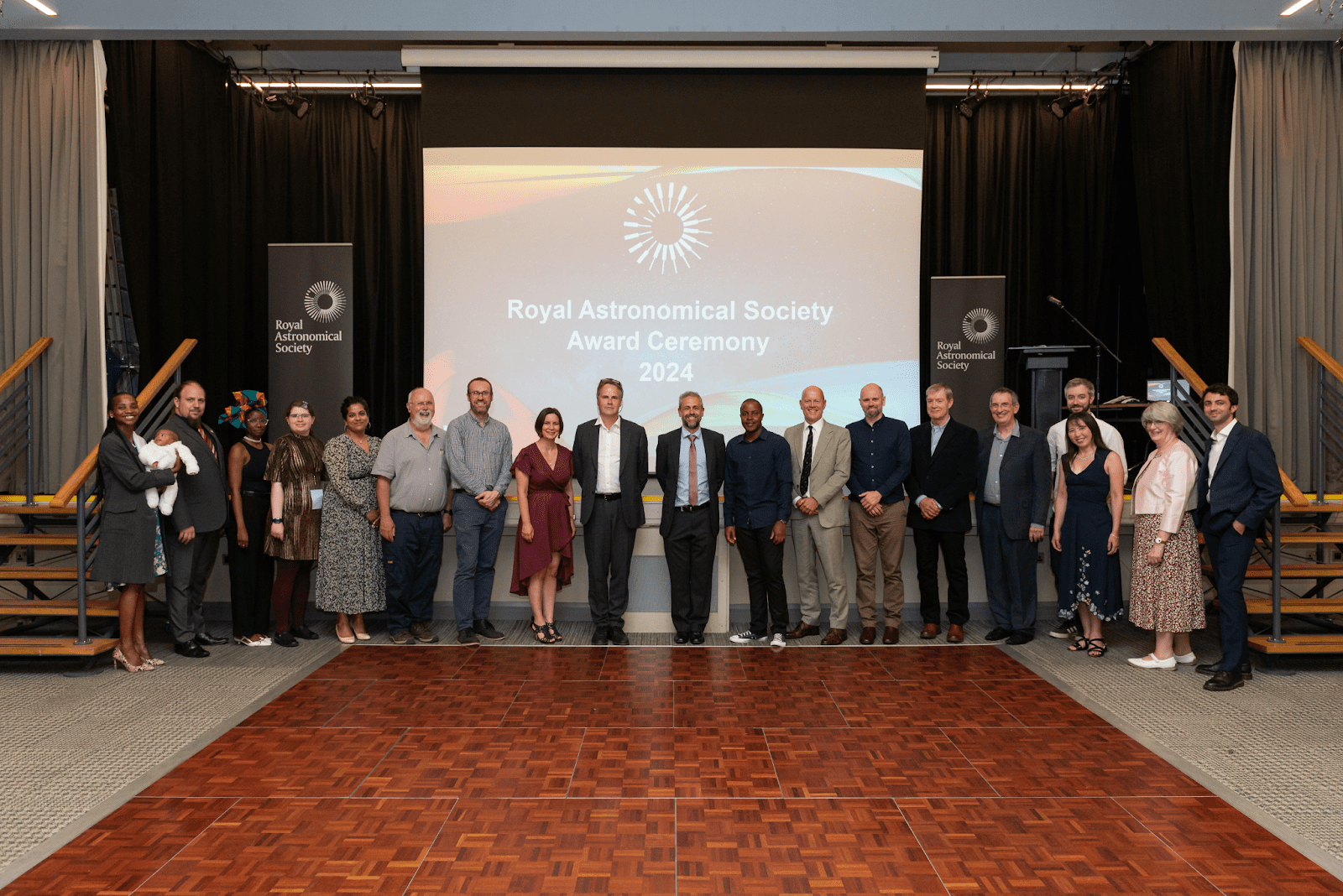
It all began with a small circle of London-based scientists who, one winter evening, decided to create a dedicated space for exchanging knowledge about the stars. The Royal Astronomical Society (RAS) is one of the world’s oldest and most influential scientific institutions, and for more than two hundred years, it has been shaping humanity’s understanding of both the cosmos and the Earth. Its publications steer the course of modern astronomy and geophysics, its members are instrumental in international space missions, and its advice informs the UK government’s science policy. Ultimately, the Society is committed to promoting the study of the Universe, safeguarding scientific heritage, and ensuring that knowledge is accessible to everyone. Read more on london-future.
The Genesis of the Royal Astronomical Society
The idea sparked at a dinner on 12 January 1820, when fourteen astronomy enthusiasts, including the likes of Charles Babbage and John Herschel, gathered to discuss the future of star science. Their joint desire to advance observations and disseminate knowledge formed the bedrock of the London Astronomical Society. Just two months later, on 10 March, the newly formed council held its first meeting, electing Sir William Herschel—the eminent astronomer who discovered the planet Uranus—as its Honorary President. A pivotal moment came on 7 March 1831, when King William IV signed the Royal Charter, officially recognising the organisation as the Royal Astronomical Society.
From its inception, the RAS was deeply involved in publishing scientific research. Memoirs of the RAS began appearing as early as 1822, followed five years later by the Monthly Notices of the Royal Astronomical Society, which rapidly became one of the leading international journals in the field of astronomy and astrophysics. Richard Sheepshanks was the first editor, setting high standards for academic rigour and the open exchange of knowledge. Alongside its publishing activities, the Society gradually built its own library and archive, acquiring manuscripts, star charts, and historical instruments.
Expanding Horizons: From Sun Eclipses to Earth’s Core
From 1870 onwards, the Royal Astronomical Society, in collaboration with the Royal Society, began organising national expeditions to observe solar eclipses. Observations at the Madras Observatory in India played a crucial role in this research, where Chintamani Ragoonatha Chary and Ayiz Pogson studied the Sun’s corona during the eclipses of 1868 and 1871. Symbolically, a man became the first Indian Fellow of the Society in 1872, yet a woman was refused membership due to her gender in 1886.
Eventually, the RAS membership included researchers studying not only the cosmos but also the Earth itself. This interdisciplinary approach was key in the development of geophysics as a distinct scientific field. One of the first steps in this direction was the work of the Italian physicist Vincenzo Consolato Antonio Ferraro, who became a Fellow in 1931 after publishing a pioneering study on Earth’s magnetosphere. A few years later, in 1936, he was joined by Inge Lehmann, the distinguished Danish geophysicist and seismologist. Lehmann famously established that our planet’s solid inner core is surrounded by a molten outer layer. Her discovery fundamentally changed our understanding of the Earth’s structure, blending astronomical methods with in-depth studies of the globe.
During the 1970s and 1990s, the Royal Astronomical Society actively participated in global space missions. Two projects yielded exceptional results: the International Ultraviolet Explorer (IUE), launched in 1978 in partnership with NASA and the European Space Agency (ESA), and the Infrared Astronomical Satellite (IRAS), which achieved a breakthrough in infrared astronomy in 1983. The IUE mission, initially conceived as a mere three-year experiment, continued until 1996, vastly exceeding all expectations and leaving a huge legacy of data for subsequent generations.
Beginning in 2014, the RAS initiated the major RAS200 project to celebrate its bicentenary. Its aim was to dramatically increase public interest in astronomy and geophysics. However, the 2020 anniversary celebration, planned to feature the grand unveiling of a new logo and banners at Burlington House, had to be modified due to the COVID-19 pandemic. Ultimately, instead of a traditional ceremony, the vision was brought to life in an online format on the official website and social media channels.
Recognising the Royal Astronomical Society’s Impact
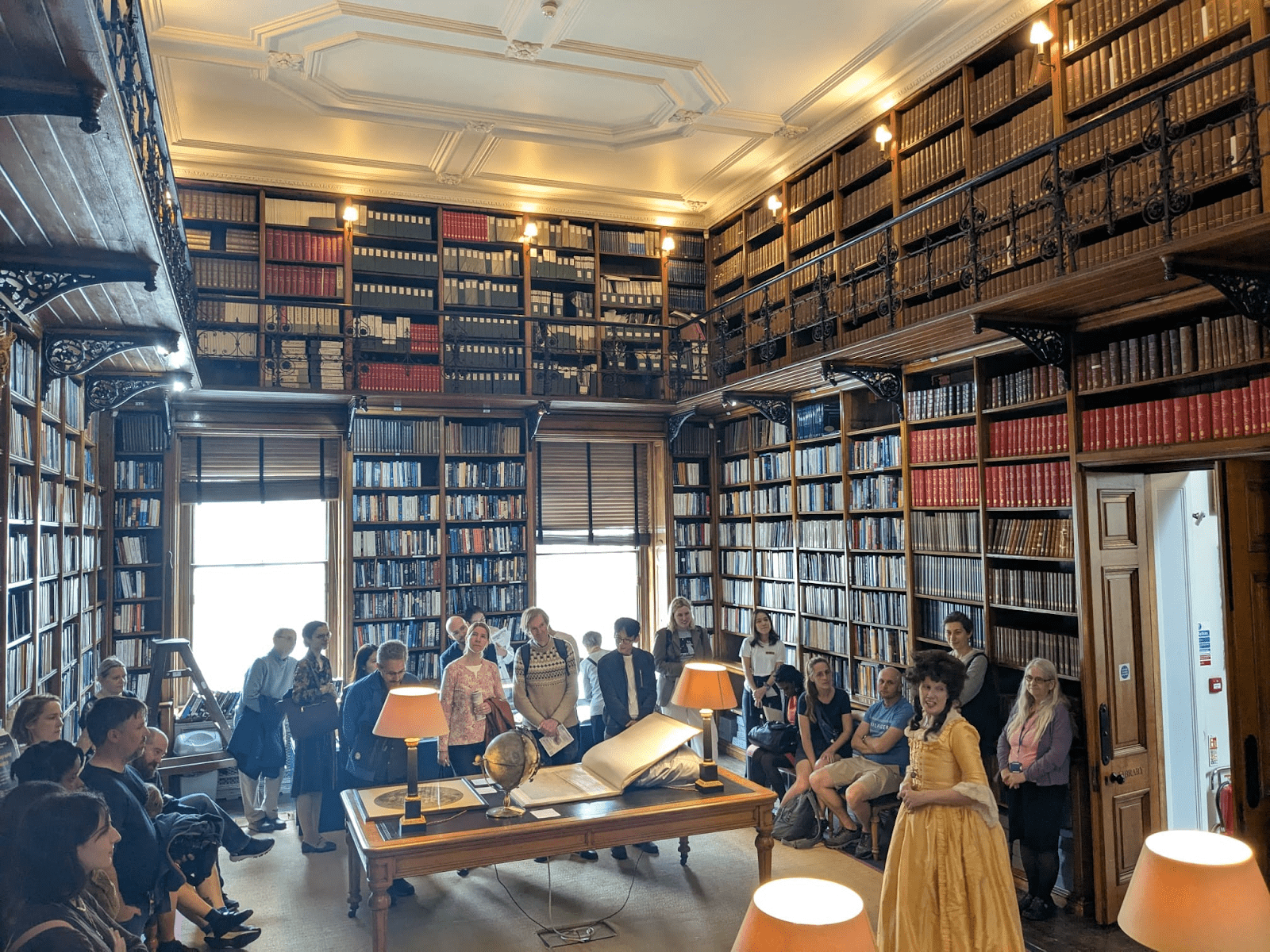
In its more than two centuries of existence, the Royal Astronomical Society has become one of the world’s most authoritative scientific institutions, defining the direction of development for astronomy, geophysics, and Solar System sciences. It champions and supports research into space and Earth, bringing together over 4,000 members from across the globe. One of the RAS’s most notable assets is its unique library, which holds over 10,000 books and nearly 300 current periodicals covering astronomy, astrophysics, and geophysics. This collection is widely regarded as the most comprehensive in the United Kingdom. The Society is also renowned for its influential scientific publications, including the Monthly Notices of the Royal Astronomical Society, the Geophysical Journal International, and RAS Techniques and Instruments.