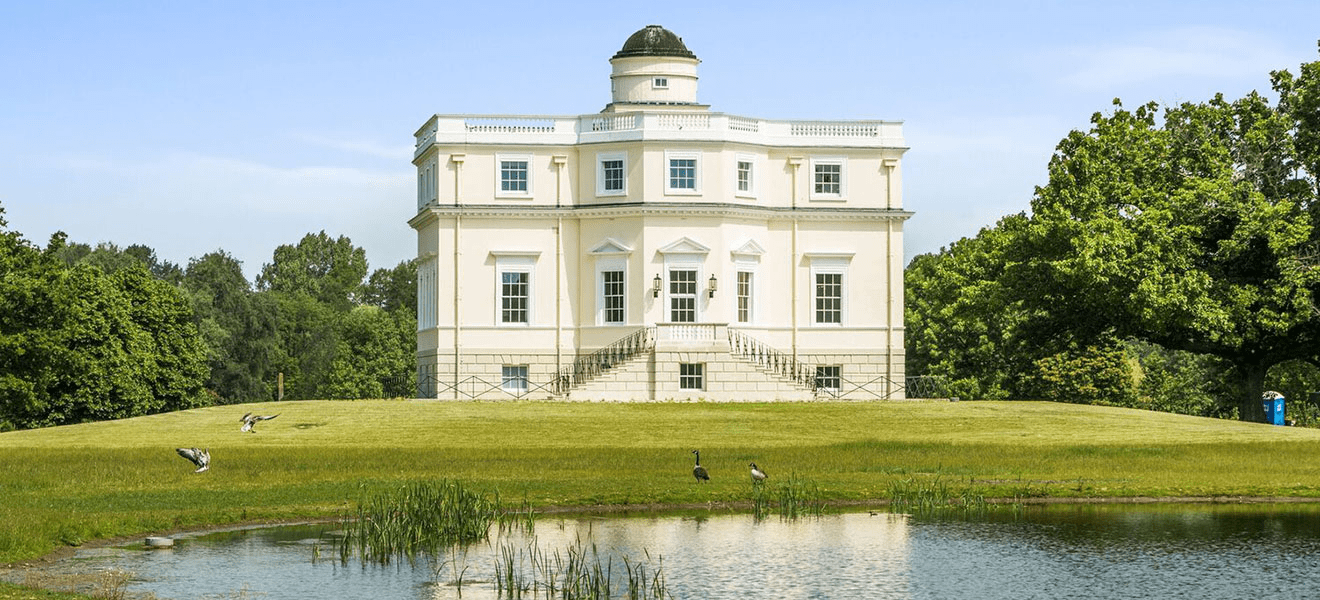
At the beginning of his reign, King George III had a vision for more than just a magnificent country residence. He dreamt of a space where the power of nature, the beauty of the landscape, and the pursuit of scientific knowledge could all come together. This is how the King’s Observatory came to be located within the monarch’s very own park. Read more on london-future.
The Foundation and Evolution of the King’s Observatory
Known for his keen interest in natural sciences, King George III was determined to make a significant contribution to the field of astronomy. He conceived the idea of building an observatory right in his own park to observe the transit of Venus across the Sun, a rare celestial event expected on 3 June 1769. To bring his plan to life, the king commissioned the renowned Scottish architect, William Chambers, to design the scientific institution. Thanks to their coordinated efforts, the construction of the King’s Observatory was finished just in time for the royal couple to witness the unique astronomical spectacle.
However, the King’s Observatory was not solely dedicated to studying the cosmos. Its walls also served as a classroom for the royal children, and it housed a fascinating collection of sophisticated mathematical instruments, rare natural history exhibits, equipment for philosophical experiments, and minerals from German mines. Given George III’s particular passion for clockmaking, the institution also held his personal collection of clocks.
In the 1840s, the King’s Observatory found itself without a permanent purpose, and was subsequently handed over to the British Association for the Advancement of Science. From that point on, it operated under a new name: the Kew Observatory. In the 1850s, the institution transformed into a key scientific centre for calibrating and testing various instruments, including barometers, thermometers, clocks, chronometers, and sextants. The reliability of each tested instrument was confirmed with a special marking—the “Kew Certificate”—which became a symbol of accuracy and quality.
In 1871, the responsibility for the Kew Observatory was taken over by the Royal Society. By 1900, the National Physical Laboratory, a crucial hub for national measurement standards, had been established on its grounds. Then, in 1910, the Meteorological Office also began operating from the institution, further solidifying its scientific importance.
Despite this growth, urbanisation and the development of London’s infrastructure had a downside. The city’s electrification created significant electromagnetic interference for the sensitive geomagnetic instruments. As a result, some of the equipment was moved away from the urban noise of the Kew Observatory to the Eskdalemuir Observatory. By 1980, the Meteorological Office had completely ceased its operations in the building, and the property was returned to the Crown Estate. It then reverted to its original, historic name: the King’s Observatory.
In 1985, the King’s Observatory underwent a meticulous restoration and was adapted for use as commercial offices. From 1986 to 2011, it served as the UK headquarters for the company Autoglass. Later, the lease was transferred to Robbie Brothers of Kew Holdings Limited. Eventually, in 2014, the local authority of Richmond upon Thames granted permission for the observatory to be converted into a private, single-family residence.
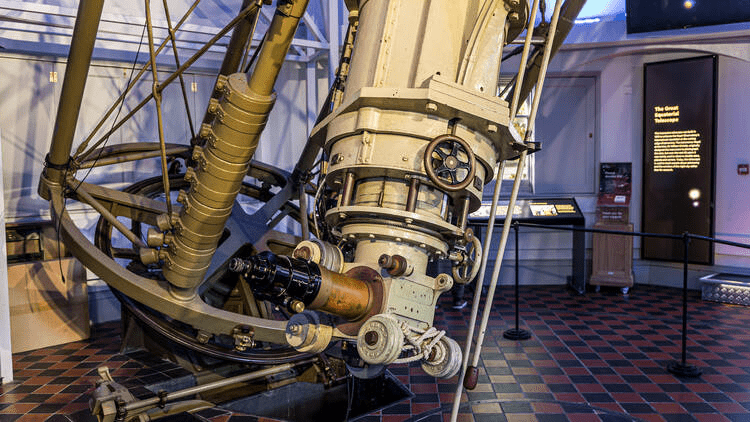
Recognition and Significance of the King’s Observatory
For nearly two centuries, the King’s Observatory was one of Europe’s leading scientific centres. It was the site of solar observations, measurements of the Earth’s magnetism, meteorological and seismological research, and studies of the upper atmosphere. The data and research from the institution served as a benchmark for international facilities such as the Colaba Observatory, Stoneyhurst College, and the Madrid Observatory. Today, it stands as a cherished part of Britain’s national heritage, opening its doors to the public each year.