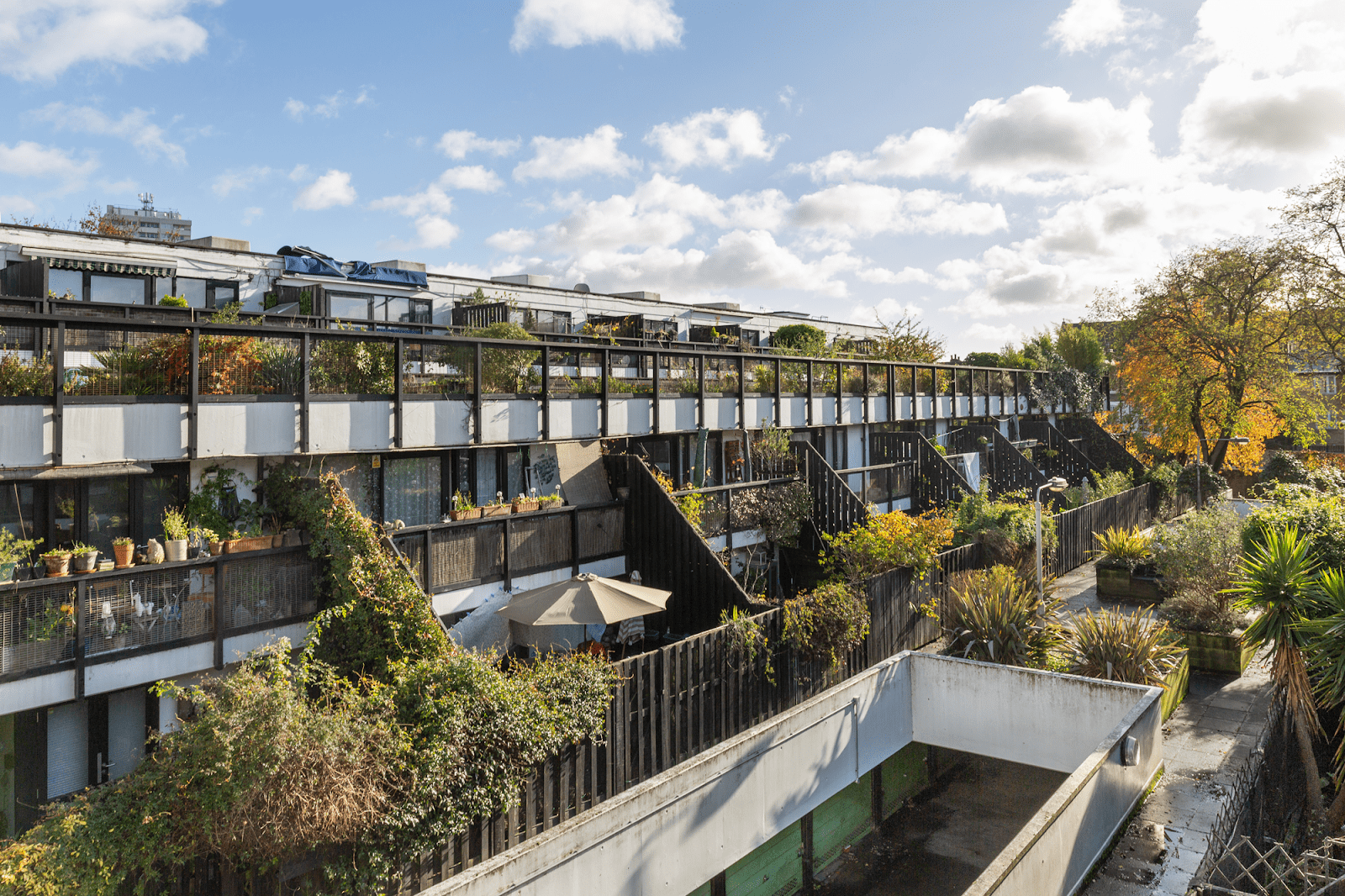
Designed by Neave Brown in the late 1960s, the Dunboyne Road Estate was a groundbreaking project, pioneering a high-density, low-rise approach to social housing in Britain. The development expertly balanced the need for privacy with a sense of community, blending innovative design with respect for the traditional urban landscape. It is now widely regarded as one of the finest examples of modernist social housing in the brutalist style. Read more on london.future.
The History of the Dunboyne Road Estate
From a young age, Neave Brown had a passion for art, but architecture wasn’t his initial calling. He first saw himself as an artist before deciding to pursue a different path, which led him to move to Britain and study at the Architectural Association in London. After several years of working for established firms, he completed a small residential project that laid the groundwork for his future ideas. It was then, alongside a group of like-minded colleagues, that he proposed a new concept for communal living, a concept that would later evolve into a truly experimental architectural project: the Dunboyne Road Estate.
While society was searching for new forms of urban housing, Neave Brown proposed his low-rise, high-density solution in the latter half of the 1960s. The Dunboyne Road Estate was completed in the mid-1970s in Hampstead, an area known for its tranquil atmosphere and diverse architecture. Brown successfully integrated the new structure into the existing landscape, ensuring it didn’t disrupt the neighbourhood but instead felt like a natural continuation of it. He took the classic London terraced house as his starting point, but reimagined it through the lens of the modernist movement.
The Dunboyne Road Estate comprises 72 homes arranged in six parallel two- and three-storey blocks. Two of the blocks are connected by a central pedestrian walkway, which helps foster a feeling of shared space. The three-storey sections feature three-bedroom maisonettes at the top and one-bedroom flats below. This clever structure allowed the project to cater to the diverse needs of different social and family groups.
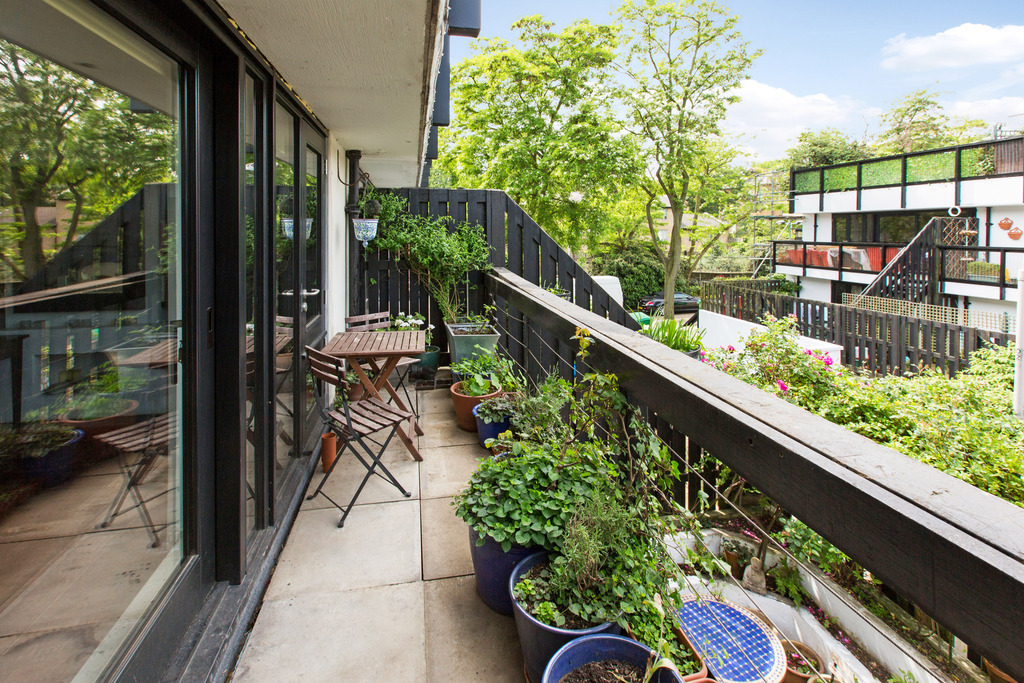
The architectural aesthetic of the Dunboyne Road Estate is built on a balance of contrasts. Characterised by its modernist rough, exposed concrete, a symbol of the 1960s and 70s, the design is softened with dark timber, which also adds a sense of privacy to the terraces and outdoor areas. This brutalist ruggedness is offset by the crisp white of the interior walls, while the space is brought to life with greenery. Plants in courtyards and along walkways create the feel of an English garden, allowing residents to feel connected to nature while still being in a city environment. This contrast of materials and atmosphere reflects Neave Brown’s central idea: that social housing shouldn’t be cold and alienating, but should foster a sense of home and community.
It took several decades for Neave Brown’s work to receive official recognition. In 2010, the Dunboyne Road Estate was granted Grade II listed status by English Heritage. This move underscored the estate’s importance as a cultural and architectural landmark, serving as a reminder that not all social projects from the 1960s and 70s were faceless concrete high-rises. However, the decision wasn’t without controversy among residents. Many feared the new status would only delay long-overdue renovations. At the time, the council had not yet provided the necessary updates, and the estimated cost of restoration was at least £1.2 million.
Recognition and Significance of the Dunboyne Road Estate
The Dunboyne Road Estate wasn’t just an architectural experiment; it became a symbol of a new approach to social housing in Britain. It was the first example of a high-density, low-rise development that successfully combined residents’ need for privacy with open communal spaces and a strong sense of community. Neave Brown’s project proved that housing for the masses could be more than just functional — it could also be aesthetically pleasing, humane, and innovative.