
Priest, astronomer, teacher, traveller, and lecturer — all these roles were embodied by Aloysius Cortie. He earned his place in history as a pioneering solar researcher who made significant contributions to the study of solar eclipses, spectroscopy, and the magnetic phenomena linked to the sun’s activity. His scientific work extended beyond Britain, reaching numerous international forums and expeditions. Read more on london-future.
Aloysius Cortie’s Early Years and Astronomical Path
Aloysius Cortie was born on 22 April 1859 in London. Raised in a Catholic family, he began his education at Stonyhurst College in 1872. After six years of schooling, he joined the Society of Jesus and began his novitiate in Roehampton. He continued his academic career at the University of London, where he successfully graduated in 1881.
For the next three years, Cortie studied philosophy at St Mary’s Hall before returning to Stonyhurst as a teacher of mathematics and natural sciences until 1889. He then continued his priestly service at St Beuno’s College, where he was ordained as a priest in 1892. After a brief teaching stint at a newly established college in Stamford Hill, he returned to his alma mater in 1895 to dedicate himself once more to teaching mathematics.
However, Cortie’s activities weren’t limited to academia. His role as a preacher who could seamlessly blend science and theology was particularly noteworthy. From 1892, his participation in British Association meetings became a key part of his work. Each of his speeches was a thorough apologetic analysis aimed at an intellectual audience. As noted in The Tablet magazine, his sermons were a true example of combining religious faith and scientific thought.
Cortie’s academic curiosity soon became particularly evident in his research on solar eclipses, which opened up new frontiers for studying the sun. He travelled to Spain in 1905, Tonga in 1911, and Sweden in 1914. He was also an active participant in the most important meetings of leading astronomical societies. Specifically, he took part in the Solar Union events in Meudon in 1907, on Mount Wilson in 1910, and in Bonn in 1913. From 1911 to 1925, he led the Manchester Astronomical Society, transforming it into one of Britain’s most dynamic scientific hubs.
In 1919, following the death of his colleague Walter Sidgreaves, Cortie became the director of the Stonyhurst College Observatory — a position that symbolised the peak of his scientific career. In 1921, he attended a meeting of the Astronomical Society in Potsdam, and in 1922, an international congress in Rome organised by the International Astronomical Union. On 8 February 1921, he was elected a member of the Manchester Literary and Philosophical Society, and four years later, he became its president. Soon after, Aloysius Cortie contracted influenza, leading to his death on 16 May 1925.
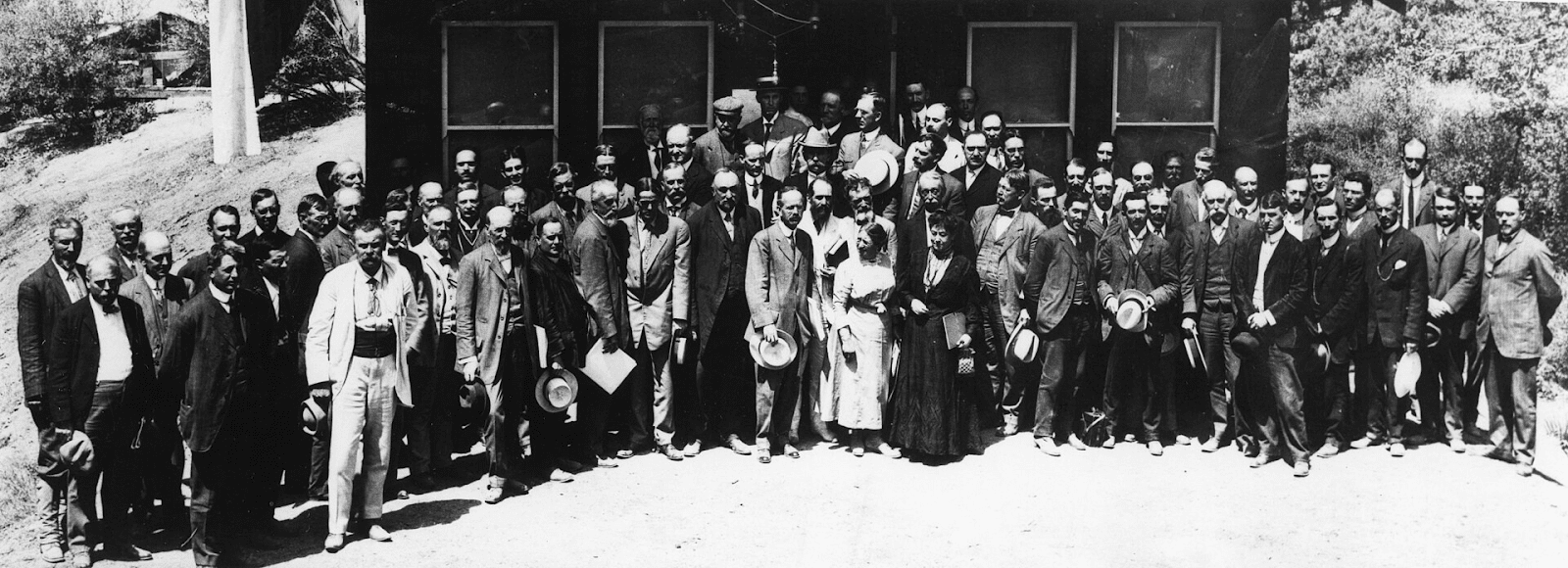
Aloysius Cortie at the fourth conference of the International Union for Cooperation in Solar Research, 1910
The Recognition and Importance of Aloysius Cortie’s Scientific Work
Aloysius Cortie left a profound and multifaceted legacy in both the religious and scientific worlds. His work was divided into several key areas, each of which gained international recognition. His most significant contribution was his research into the relationship between sunspots and magnetic phenomena. The second important area of his work was his spectroscopic observations. Thanks to his high precision and methodical approach, he obtained photographs of the sun’s outer atmosphere spectra and promptly published his research findings. His expeditions to Spain, Tonga, and Sweden to observe solar eclipses became a model of effective scientific organisation, and their results were a significant contribution to the development of astrophysics.
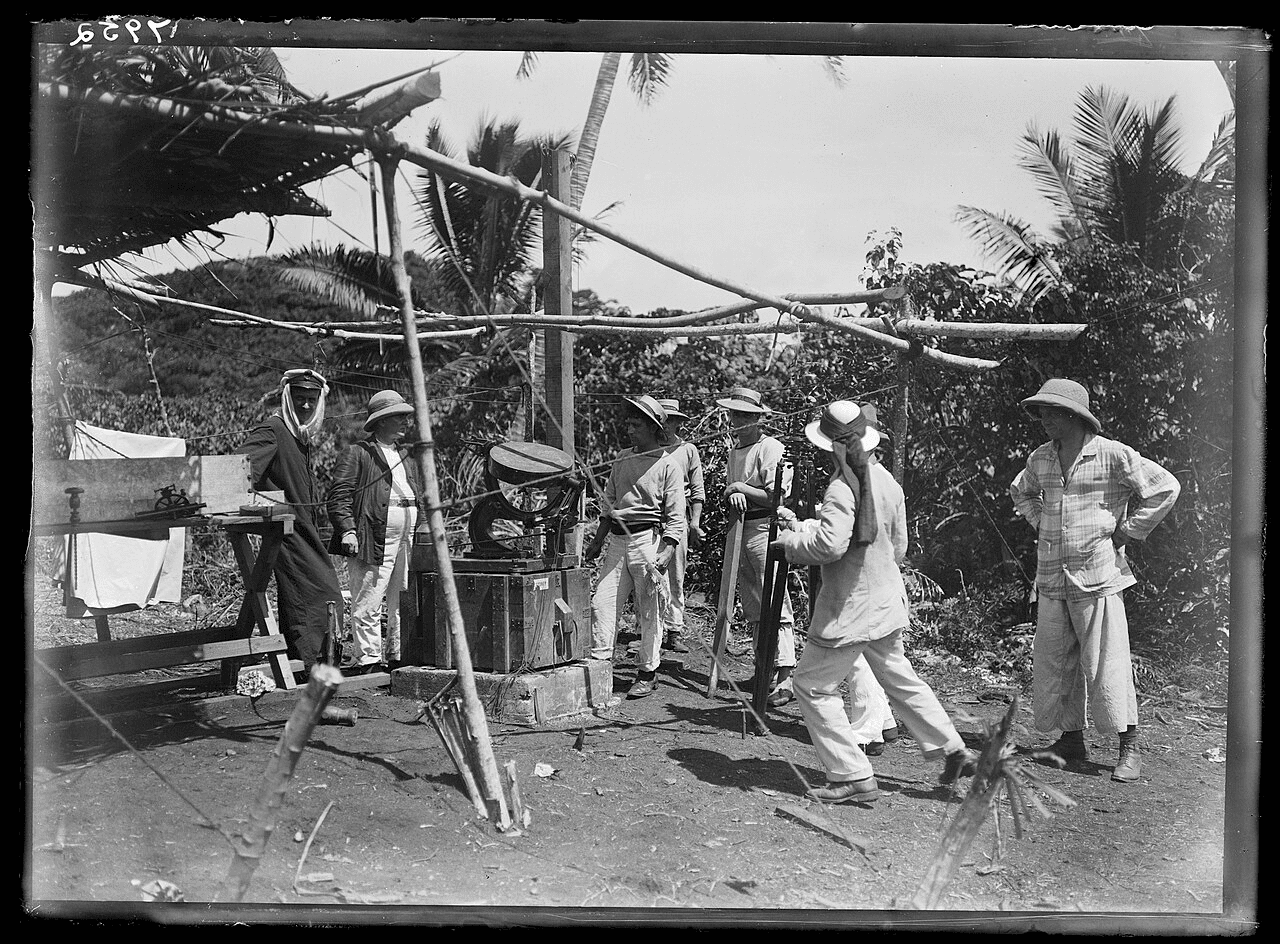
Aloysius Cortie’s coelostat

