

One of the most common associations with London is its main river, the Thames. Its history is rich with fascinating facts. The river is a symbol of the city and one of the driving forces behind its development. Throughout the British capital’s history, it has played a vital role in many areas. In particular, the most important place associated with the Thames has always been its port. In various periods, it was a base for the navy, a hub of bustling trade, a departure point for cargo ships, and the start and end of journeys for many famous people. What else can the history of the Port of London reveal? Read more at london-future.
Early History
The history of the Port of London begins with the arrival of the Romans in the area. It is well-known that the city flourished during this period. The Romans brought numerous original construction technologies, military knowledge, and methods for establishing trade. They succeeded in building a unique harbour by extending the waterfront. Thus, even back then, the port played an enormous role in London’s development and prosperity. It should also be noted that, at the time, maritime trade was considered the foundation for achieving economic, political, and financial success.
After the Romans departed, London faced increasing hardships. The city began to decline in many areas. Successive conquerors brought significant destruction. However, the port remained the most vital part of the city. Everyone who came to this land was interested in its continuous operation. For example, during the Norman period, the port was used for both commercial and military purposes.
Further Development and Rise
Significant changes to the Port of London’s operations occurred in the early 19th century. The West India Dock Act, passed in 1799, provided for the construction of enclosed docks. This allowed goods to be moved quickly and efficiently from ships to warehouses or other forms of transport. It also helped to create more jobs. Furthermore, the 19th century saw the crucial transition to steamships, which significantly increased the tonnage of vessels the port could handle.
The development and construction of new docks continued throughout the 19th century. The Port of London expanded and prospered. Its importance to the whole of Great Britain was hard to put into words. However, the port also faced many difficulties. While its operation provided jobs for thousands, the working conditions were appalling, and fatal accidents from falling cargo became increasingly common. This led to the London Dock strike in 1889, which drew national attention to the conditions, invigorated the trade union movement, and led to improvements for workers across Great Britain. Another major difficulty was the fierce rivalry between the various wharves and docks. This all became a compelling reason for the creation of the Port of London Authority in 1908. A single commission helped to establish control over all the facilities.
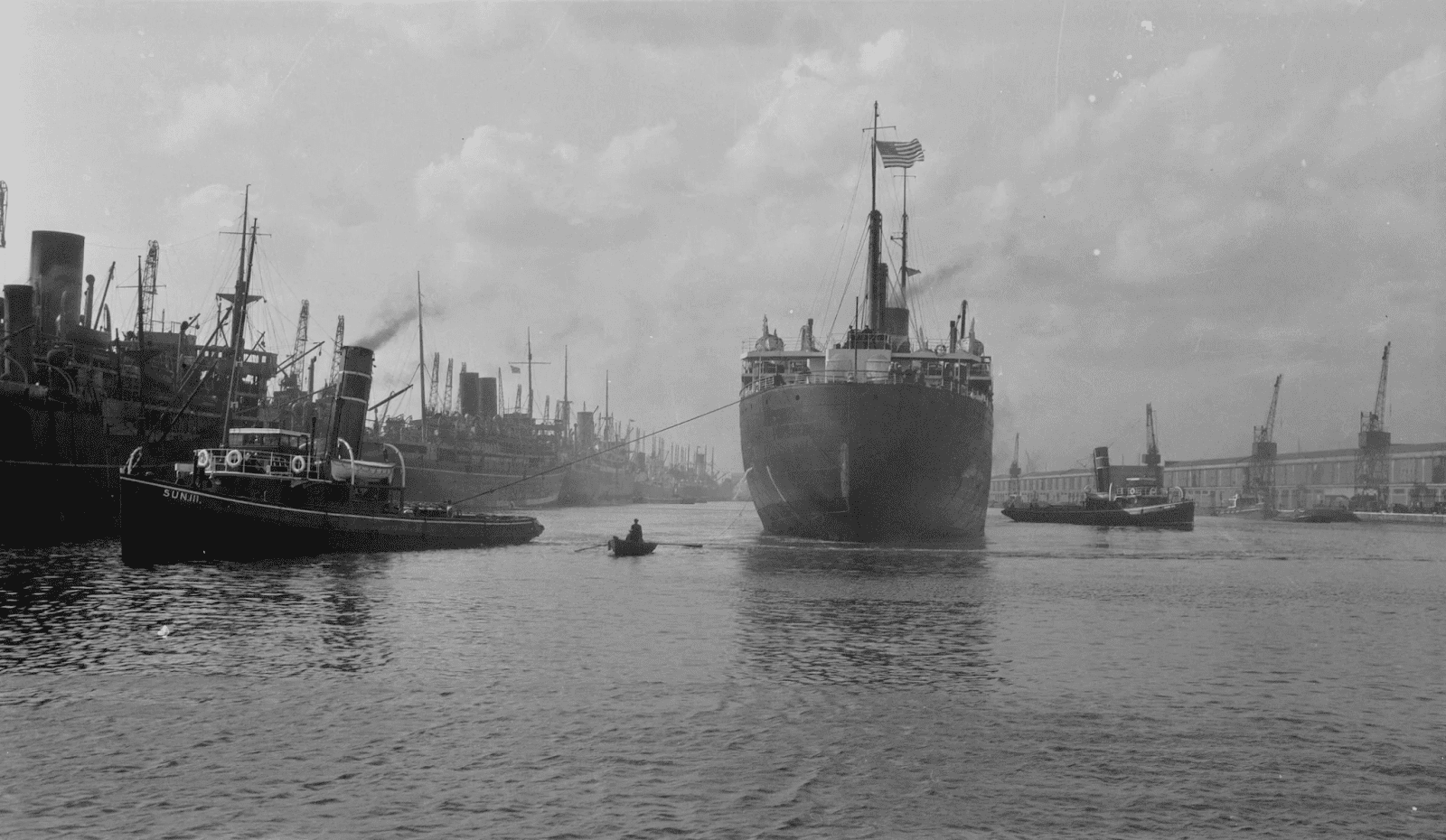
The Port of London also played a significant role in both World Wars. A key event was the opening of London’s last enclosed dock in 1921. Construction of the King George V Dock had begun in 1912 but was delayed by the outbreak of the First World War. Its completion made the Royal Docks complex the largest in the world. Bombing during the Second World War destroyed several docks, but the port endured this difficult period as well. The modern port consists of 70 independent terminals and port facilities. It imports large quantities of oil products (though it once refined crude oil on-site). The Port of London services cruise liners, ferries, and cargo of all types at its larger facilities in its eastern section. Its role in the development of the city and the entire country remains immensely important.