

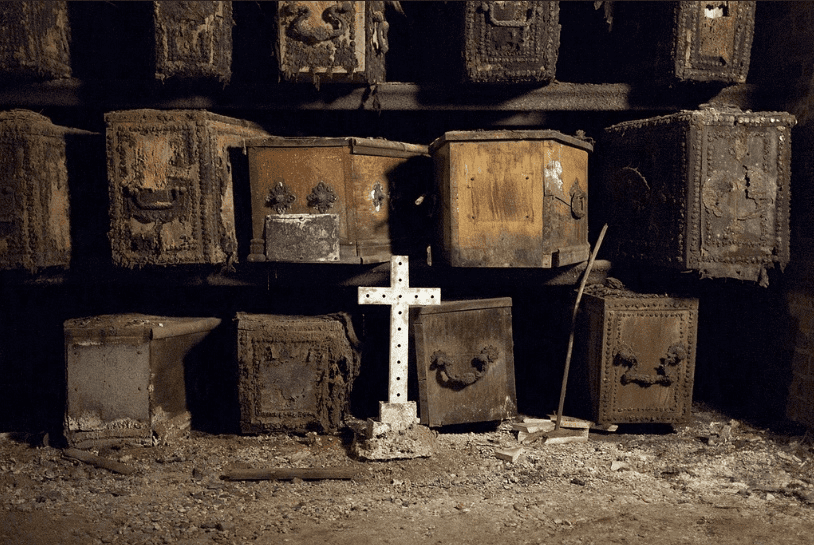
Anglican and unconsecrated burials, a chapel and a columbarium, vaults and catacombs all converge at West Norwood Cemetery. Although it has long been closed to new interments, its silence is occasionally broken by enthusiasts of the afterlife, funeral ceremonies, and cremations. Read more at london-future.
The Founding and Development of West Norwood Cemetery
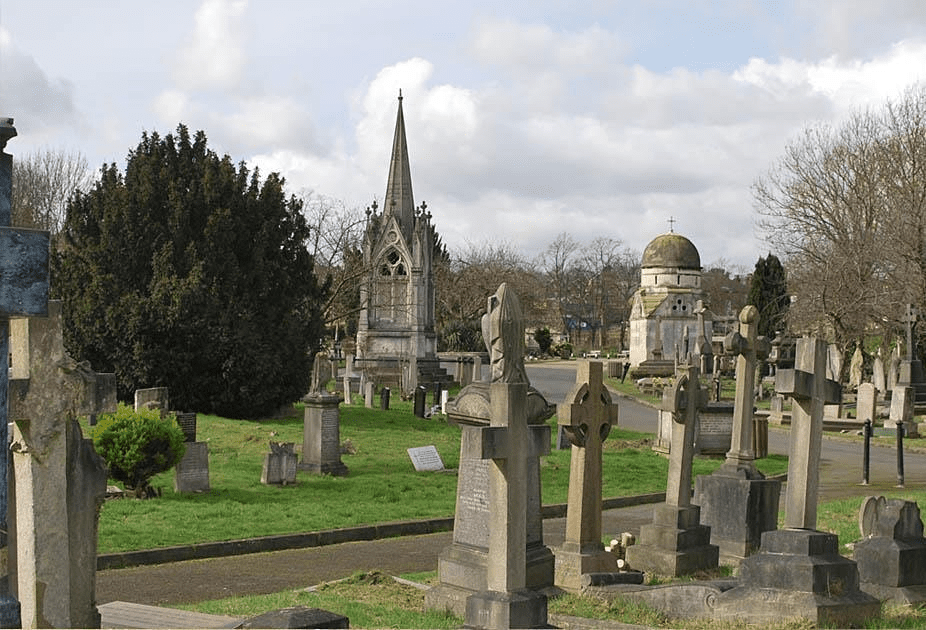
In 1836, the South Metropolitan Cemetery Company was granted permission to purchase land on the former estate of the late Lord Edward Thurlow. By 1837, West Norwood Cemetery had been constructed to the designs of architect William Tite. He took great care with the landscaping and several monuments, eventually finding his own final resting place within his creation. With its grand entrance arch, chapels, catacombs, and gardens, the cemetery became one of the earliest examples of the Gothic Revival style.
On 7 December 1837, the Bishop of Winchester consecrated West Norwood Cemetery. In 1842, London’s Greek community established a Greek Necropolis on a leased section of the grounds. Influenced by classical architectural traditions, wealthy families erected grand memorials for their departed relatives. Until 1877, the consecrated lands fell under the Diocese of Winchester, later passing to Rochester. In 1905, the Diocese of Southwark assumed this responsibility.
By the early 20th century, traditional burials were gradually losing their status as the sole way to say goodbye to the deceased. Consequently, the owners of West Norwood Cemetery expanded their services, building a crematorium in 1915. However, shifting social conditions following the First World War took a toll on its fortunes. Overcrowding led to a decline in burials, while a lack of funding caused the site to fall into disrepair. During the Second World War, the chapel suffered severe damage, and the lodge was beyond repair. By the 1960s, the grounds had largely transformed into an overgrown wilderness of crumbling monuments.
In 1965, Lambeth Council acquired West Norwood Cemetery, controversially annulling previous rights. As part of a clearance programme, the council removed over ten monuments and resold more than 900 graves. This latter move was eventually ruled illegal, as the plots were privately owned at the time of the initial agreement. Following legal proceedings in the Consistory Court, the new owner was forced to halt new burials and restore several damaged or removed monuments.
Since 1989, the Friends of West Norwood Cemetery have worked to preserve the site and promote its historical and cultural significance. The group conducts research on those buried there, publishes newsletters, and raises funds to restore neglected monuments. All interested parties, including the Diocese and conservation bodies, now share oversight of the site. By 2000, the cemetery had become the final resting place for 164,000 people across 42,000 plots, supplemented by space for 34,000 cremated remains and several thousand burials in the catacombs.
Londonist
Recognition and Significance of West Norwood Cemetery
As a witness to the Victorian era, West Norwood Cemetery reflects the social and cultural shifts of the time. It boasts a unique collection of monuments in Greek, Gothic Revival, and Neoclassical styles. Many prominent inventors, engineers, architects, physicians, and artists are buried here, including Henry Bessemer, James Henry Greathead, David Roberts, George Stansbury, William Marsden, and Gideon Mantell. Thanks to English Heritage, the site is listed on the National Register of Historic Parks and Gardens as one of the premier Gothic Revival cemeteries.
South London Botanical Institute