

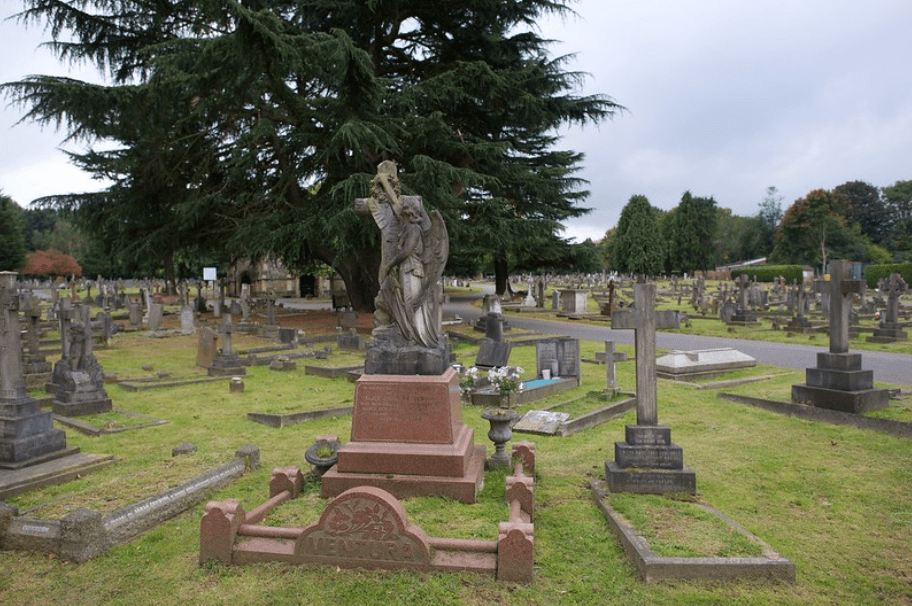
In the mid-19th century, industrialisation and urbanisation transformed British cities into overcrowded metropolises, struggling for space for both the living and the dead. The Anglican Church set out to solve this problem, leading to the establishment of East Sheen Cemetery, a historic burial complex in London. What began as a simple burial ground soon became an embodiment of the Victorian culture of death. Read more at london-future.
Flickr
The Founding and Development of East Sheen Cemetery
In 1854, the Anglican Church established Barnes Cemetery in London. For £10, it purchased 2 acres of land, and for £1,400, it developed the site with a chapel, a lodge, and landscaping. Initially, the cemetery served as additional burial grounds for the local parish. Over time, it evolved into a resting place for the Victorian elite, with numerous monuments and sculptures commemorating the era’s prominent figures.
It was rumoured that Barnes Cemetery was haunted by a ghostly nun, said to hover over the grave of Julia Martha Thomas. In 1879, Thomas was murdered by her maid, Kate Webster. During an argument, Webster pushed her down the stairs and then strangled her. The murderer dismembered the body, partially burned it, and attempted to dispose of the remains, which were later found in the Thames. Ultimately, she was convicted and hanged at Wandsworth Prison.
The land around Barnes Cemetery historically belonged to King George III. Initially, only the northern half of the site was consecrated for burials, while the southern half was used as a plant nursery. In the 1930s, both areas were united under the single name of East Sheen Cemetery. It came under the management of the Municipal Borough of Barnes, while the adjacent Richmond Cemetery was managed by the Borough of Richmond. In 1965, East Sheen and Barnes became part of the Municipal Borough of Twickenham, forming Richmond upon Thames. There was a plan to convert the necropolis into a lawn cemetery, using memorial plaques to mark graves instead of traditional monuments. The council demolished the chapel, lodge, and railings but later abandoned the plan and effectively deserted the site.
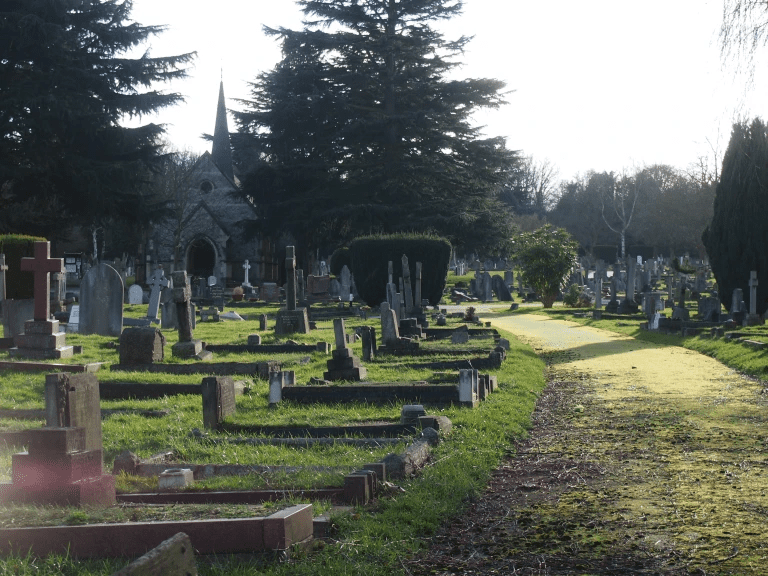
Over the next three decades, East Sheen Cemetery fell into neglect, suffering from damage and vandalism. However, the situation eventually changed dramatically. Given a new lease of life, the necropolis was transformed from an abandoned site into a well-maintained and respected historical landmark. Professional management, restoration work, and public attention have made it an exemplary memorial complex. It is distinguished by its Gothic landscape design and rich vegetation. The headstones are predominantly from the Victorian and Edwardian eras, featuring marble, granite, and limestone monuments.
flickeringlamps.com
Significance and Recognition of East Sheen
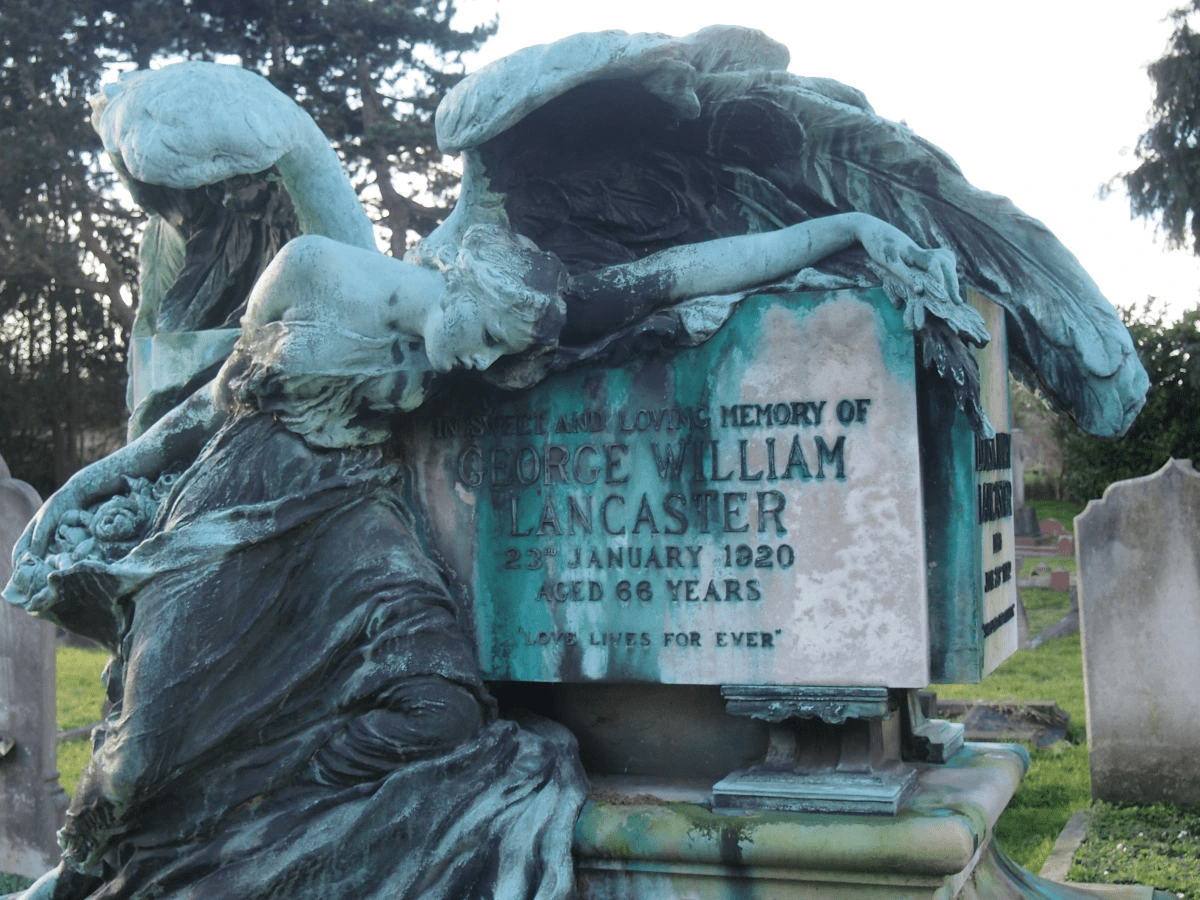
East Sheen Cemetery holds significant cultural and historical recognition in London. Representing the Victorian and Edwardian eras, it serves as the final resting place for many notable British figures. These include Clementina Black, Robert Chalmers, Alec Martin, Roy Kinnear, John Martin-Harvey, Rachel de Montmorency, and others. The most outstanding monument in the necropolis is considered to be the memorial to George William Lancaster and his companion, a 1920s bronze sculpture of an angel by Sydney March. There are also over 70 war graves, maintained by the Commonwealth War Graves Commission. Among those interred are generals, majors, and fighter pilots, including Arthur Donaldson, Hamilton Reed, and Douglas Scott. East Sheen Cemetery has a special protected status as Metropolitan Open Land and a conservation area.
Flickering Lamps