

Absolutely all Londoners know about the mysterious deep underground world of the London Tube labyrinth. Everyone who has ever been on the Underground and felt its atmosphere will always return there not only for the sake of moving between stations but also for the amazing mixture of myths and rumours. Learn more at london-future.
The London Underground is considered the most intricate transport system and its history began in the 19th century. It was opened in 1863 and became the world’s first underground railway transport.
History
The first Underground trains were powered by steam engines and had wooden carriages. The construction of the London’s Circle Line was completed in 1884. The system expanded and reached Verney Junction in Buckinghamshire, more than 80 kilometres from Baker Street and central London. The first Underground line with electric trains, which was quite deep, opened in 1890. Eight years later, the city opened the Waterloo & City Line, followed by the Central Line in 1900 and the Great Northern and City Railway in 1904.
The Underground Electric Railways Company was founded in 1902. The city’s residents quickly realised that type of transportation was quite easy and fast and other cities, inspired by London’s success, began to create their own Underground systems.
Mysterious labyrinth
Of course, we can’t forget about the myths and secrets of the London Underground. There are rumours about the royal evacuation tube under Buckingham Palace and a government tunnel under the Thames connecting the MI6 building with Westminster. Still, they are considered urban legends. However, there are other interesting stories about the London Underground that have finally been confirmed. These are connected with hidden ghost stations, which only adds to their mythical status and peoples’ curiosity.
The Underground has over 40 closed stations. Some of them have been demolished, but Aldwych, York Road and South Kentish Town have remained almost untouched and can be seen only during a guided tour. They were closed due to the lack of passengers. Every time people use the Underground, they imagine hidden and inaccessible stations. Filmmakers have always been interested in these mysterious stories. Therefore, the abandoned London stations have become settings for several horror films, including 28 Weeks Later and Scream.
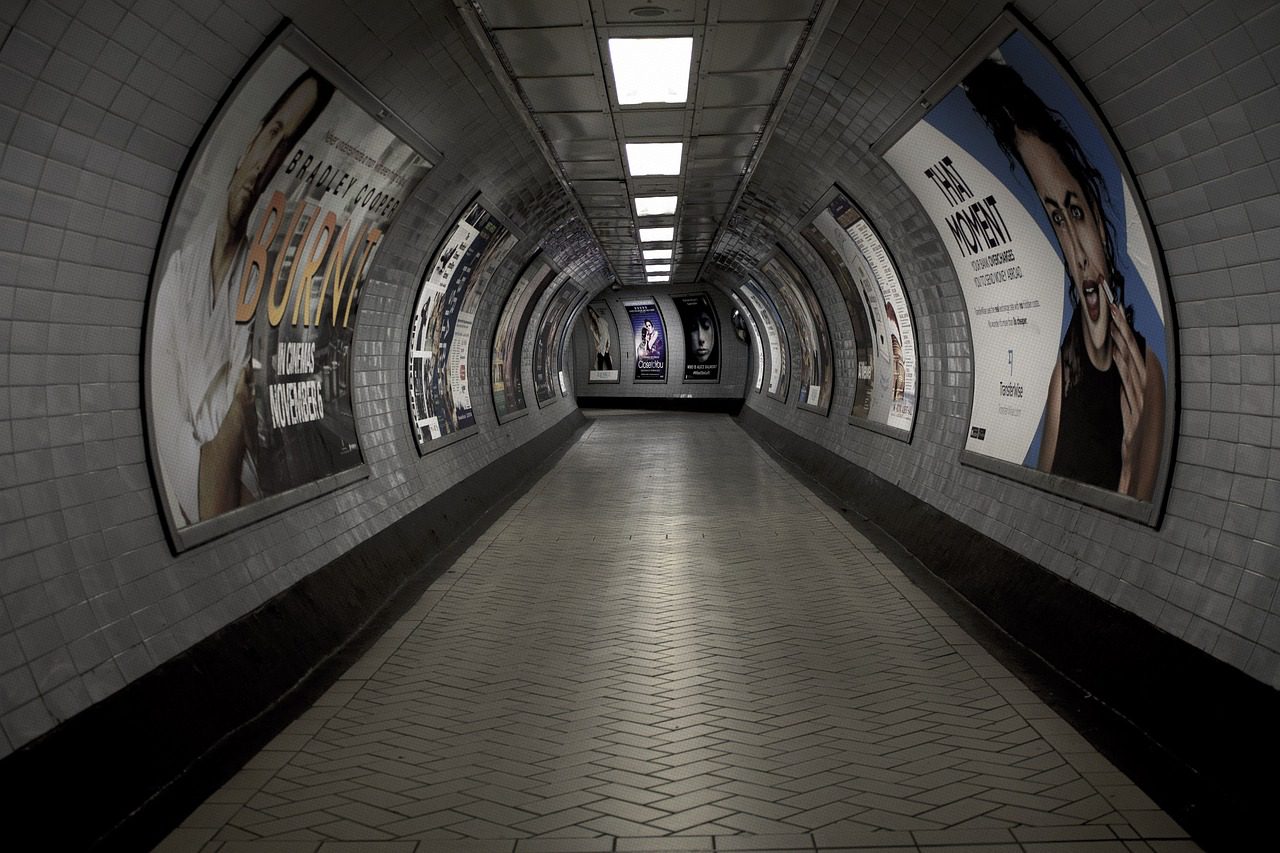
The most popular is Aldwych Station, as it is the last closed station, which remains in good condition and presents an exceptionally surreal backdrop featuring abandoned turnstiles, signs and 1990s advertising posters. Locals also believe that the Underground is haunted. For example, people claim to have seen the ghost of a screaming girl at Farringdon Station and the ghost of William Terry, an actor who died in 1897, at Covent Garden Station.
Underground stations as shelters
In 1932, the city closed Down Street Station, which had served as a shelter for the British government during World War II. There, Prime Minister Winston Churchill held meetings during the most difficult periods of the war.
At first, the government didn’t want to turn the underground stations into shelters, but the bombing intensified and the city needed additional safe premises. Thousands of local residents saved their lives from German aircraft in the underground stations. They were so crowded that sometimes people died in a stampede. The shelters had beds, toilets, food points, children’s play areas and medical points. For example, Clapham South Station could accommodate up to 8,000 people.
Some parts of the Underground system were allocated for the military and they still remain classified. The stations have preserved traces of the terrible wartime and thus can be considered a kind of museum.
Today, the London Underground is modernised and has become more comfortable for passengers. It is not only a means of transportation but also a place full of secrets, historical events and alleged ghosts.