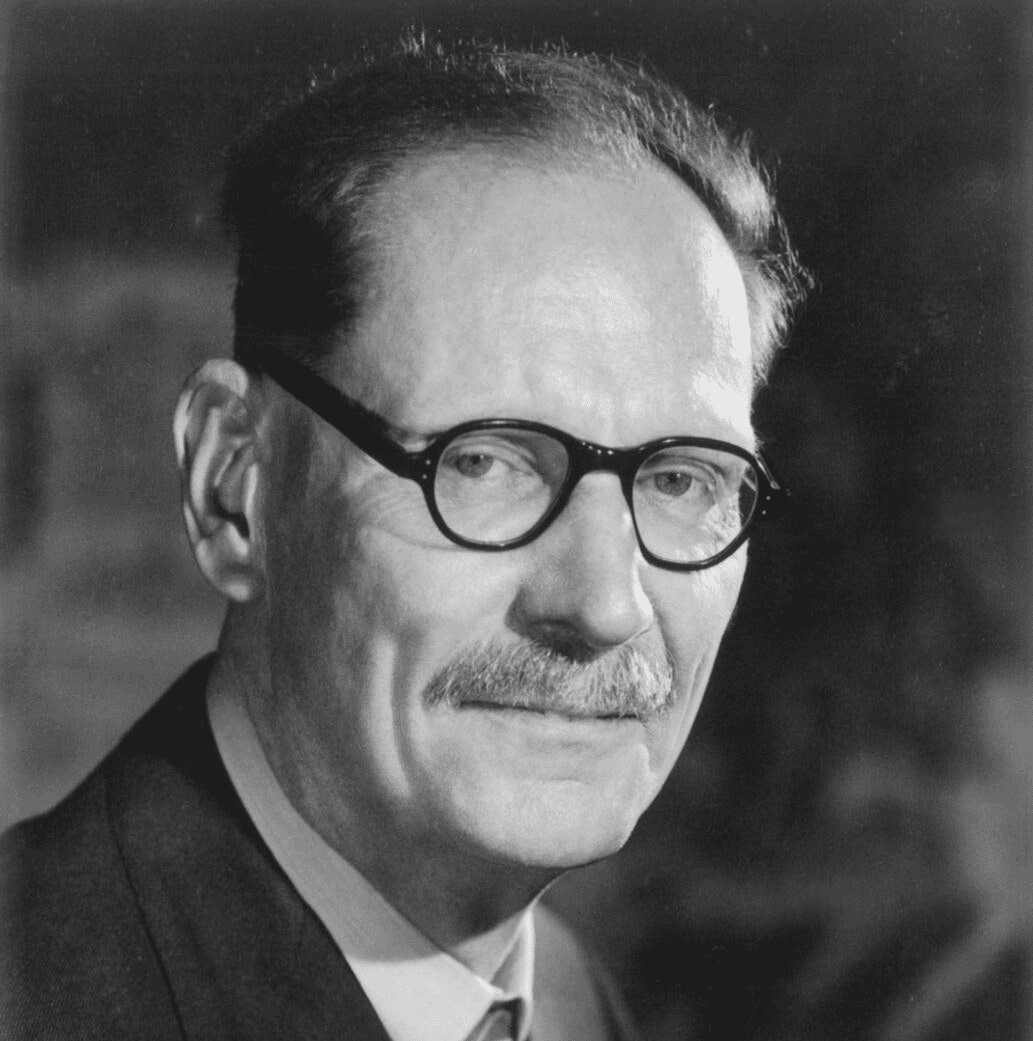
Thomas George Cowling was a distinguished British theoretical astrophysicist whose work profoundly shaped our understanding of stellar structure, kinetic theory, and plasma physics. He entered the field at a time when its foundations had been firmly established by Arthur Eddington and his contemporaries. Yet, it was Cowling’s groundbreaking contributions that compelled scientists to re-examine the pivotal role of magnetic fields in both stars and the wider cosmos. Read more on london-future.
Early Life and Thomas George Cowling’s Astronomical Trajectory
Born on 17 June 1906 in Hackney, London, Thomas George Cowling attended Sir George Monoux Grammar School from 1917 to 1923, thanks to a county scholarship. In his later years there, he concentrated on a rigorous curriculum of double mathematics, physics, and French, which provided a robust foundation for his future scientific pursuits. In 1924, he successfully sat for the scholarship examination at Brasenose College, Oxford, which he secured with financial backing from both Essex County and the Board of Education. Just a year later, he won the University Mathematical Exhibition, followed by a scholarship in 1926.
Cowling’s first two published papers were instrumental in defining the course of his research interests. One focused on the Sun’s magnetic field, and the other on stellar structure. In his work on solar magnetism, he critically assessed the hypotheses of Sydney Chapman and Ross Gunn, who had proposed that the Sun’s magnetic field was of limited radial extent. The young scientist conclusively demonstrated these assumptions to be internally inconsistent, arguing that the Sun must possess open magnetic field lines. This revelation marked a significant leap forward in the development of heliophysics.
After completing his doctoral dissertation in 1930, Thomas George Cowling was offered a Demonstratorship in the Department of Mathematics at Imperial College London by none other than his colleague and occasional critic, Sydney Chapman. Following three years there, he went on to lecture in mathematics at Swansea University, and subsequently at the universities of Dundee and Manchester. His tenure in Manchester almost entirely coincided with the years of the Second World War. Although many of his scientific peers were deeply involved in military-technical projects, Cowling remained resolutely focused on fundamental scientific research.
In 1945, Thomas George Cowling was appointed Professor of Mathematics at Bangor University, where he continued to advance his research in astrophysics and applied mathematics. Just three years later, he moved to the University of Leeds, which would become the main hub of his scientific and teaching career for the next two decades. In 1965, he was elected President of the Royal Astronomical Society, delivering influential addresses on topics such as ‘The Development of the Theory of Stellar Structure’ and ‘Interstellar and Interplanetary Magnetic Fields’. He retired in 1970, receiving the title of Honorary Professor at the University of Leeds.
A demanding combination of rigorous self-discipline, heavy teaching commitments, and scientific duties eventually took a toll on Thomas George Cowling’s health. In 1954, he underwent surgery for a duodenal ulcer, was treated for a slipped disc in 1957, and suffered a mild heart attack in 1960. These health setbacks compelled him to reduce his pace of work, although he remained scientifically active for many more years. Thomas George Cowling passed away in Leeds on 16 June 1990, just one day shy of his 84th birthday.

Recognition and Significance of Thomas George Cowling’s Scientific Work
Entering science during the formative era of modern astrophysics, Thomas George Cowling not only assimilated the work of his predecessors but significantly expanded the frontiers of knowledge regarding the internal structure of stars and their physical processes. His contribution to understanding the influence of magnetic fields on astrophysical phenomena was particularly momentous. At a time when this subject had yet to receive its due recognition, Cowling persistently argued that the behaviour of the Sun and other stars could not be explained without accounting for magnetic effects. This insight became one of the leading ideas that shaped the subsequent development of astrophysics in the latter half of the 20th century.