

London is a city of beautiful architecture and bustling streets. Every day, thousands of residents and visitors move through its neighbourhoods, making the railway network an indispensable part of the capital’s infrastructure. It is not just a transport artery; it is a revolution that once began to change the lives of millions.
The story of the railway, from the first simple locomotives to modern high-speed trains and the Underground, charts the city’s development. It is a history of constant transformation, overcoming challenges, and implementing innovations, all driven by the needs and hopes of locals for modern updates and network expansion. Read more at london-future.
Early Railway Connections
The first proposals to build a railway line from the city to Worcestershire were made as early as 1820, even before the advent of steam locomotives. The project was dubbed the “Central Union Railroad,” but this plan to transport goods never materialised. The development of steam locomotives in the 1830s ignited a period of “Railway Mania.” In 1830, an Act was passed to build a railway connecting London with Birmingham and the North West of England. Although London was densely populated, it was so compact that a train could reach the open countryside in just a few minutes. The construction of the London and Birmingham Railway was the largest civil engineering project ever undertaken in Great Britain at that time.
Locomotives of that period could only handle a certain gradient, yet the routes had to navigate hills, valleys, and waterways. This required the construction of cuttings, embankments, viaducts, and tunnels along the routes. In 1836, the London and Greenwich Railway opened, becoming the first railway in London to use steam locomotives. It connected London Bridge with Greenwich and was built on viaducts to avoid crossing the city’s busy roads.
By 1838, London was firmly on the railway map. In addition to the completion of the London and Birmingham main line, the first sections of the London and Southampton Railway were opened. The extension to Waterloo was brought into service in 1848.
The London Underground
In the mid-19th century, London’s growing population and rapid industrial development spurred the construction of new railway lines. Termini like Euston, Paddington, and King’s Cross appeared, serving as vital transport hubs. As the city’s population continued to swell, the need for an underground transport system became urgent. In 1863, the world’s first underground railway, the Metropolitan Railway, was opened. It connected Paddington to Farringdon, using steam locomotives that pulled wooden carriages lit by gas.

In 1902, the Underground Electric Railways Company of London was founded to launch more tube lines in the city. By 1907, the Underground and the District Railway lines had been electrified. During the First World War, Underground stations were used as air-raid shelters by many residents, and after the war, services were revived. In 1933, a major consolidation process created the London Passenger Transport Board. This new body was given control of bus, tram, and underground railway operators, helping to unify and co-ordinate the city’s transport system.
There were ambitious plans to extend the Bakerloo, Northern, and Central lines, but the outbreak of the Second World War halted this development. Once again, the Underground became a refuge for city dwellers sheltering from air raids. In the post-war period, London’s railways underwent significant modernisation. The new Victoria Line was added to the network between 1968 and 1971, followed by the Jubilee Line in 1979. These lines provided fast connections between different parts of the city.
London’s Railways Today
Today, London’s railway network is considered one of the largest and most developed in the world, incorporating both overground and underground lines. Witnessing the scale of London’s railway development and the profitability of the Underground concept, many private companies have become interested in further development, approaching the government with proposals for collaboration.
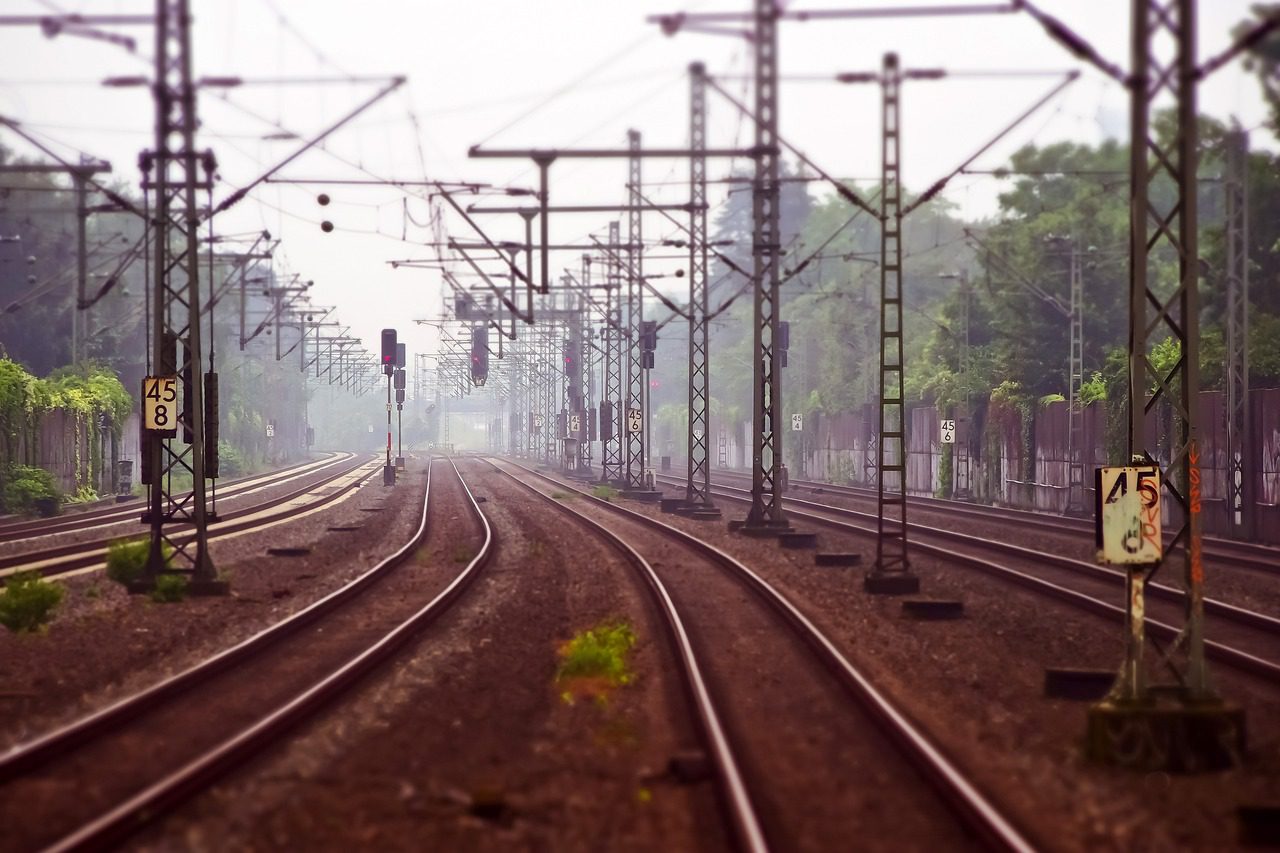
A glance at the capital’s railway map reveals lines stretching to all corners of the city. The accessibility of this transport makes life for Londoners very convenient, providing the ability to get to any destination quickly. The capital is also a major hub for international connections. The operator “Eurostar” provides high-speed links between London and Paris, Amsterdam, Rotterdam, and Brussels. There are plans to expand these routes to Cologne, Frankfurt, Milan, and Bordeaux, which will further improve connectivity between London and Europe.
In summary, the history of London’s railways demonstrates the city’s commitment to sustainable development and its ability to adapt to the constant challenges it faces. A great deal of work is undertaken to provide fast and convenient modern transport, always considering the needs of its residents. All of this has cemented the railway network’s role in making London a leading global centre for logistics and transport.