

In the 19th century, the overburdening of Great Britain’s judicial system became a catalyst for massive reform. Rapid urbanisation and the development of new police forces caused the number of prosecutions to surge to 30,000 cases. The Royal Courts of Justice (RCJ) soon fulfilled the country’s need for a specialised premises for claims, hearings, and appeals. Becoming a true symbol of the English legal system, it established itself as one of the largest courts in Europe. Read more at london-future.
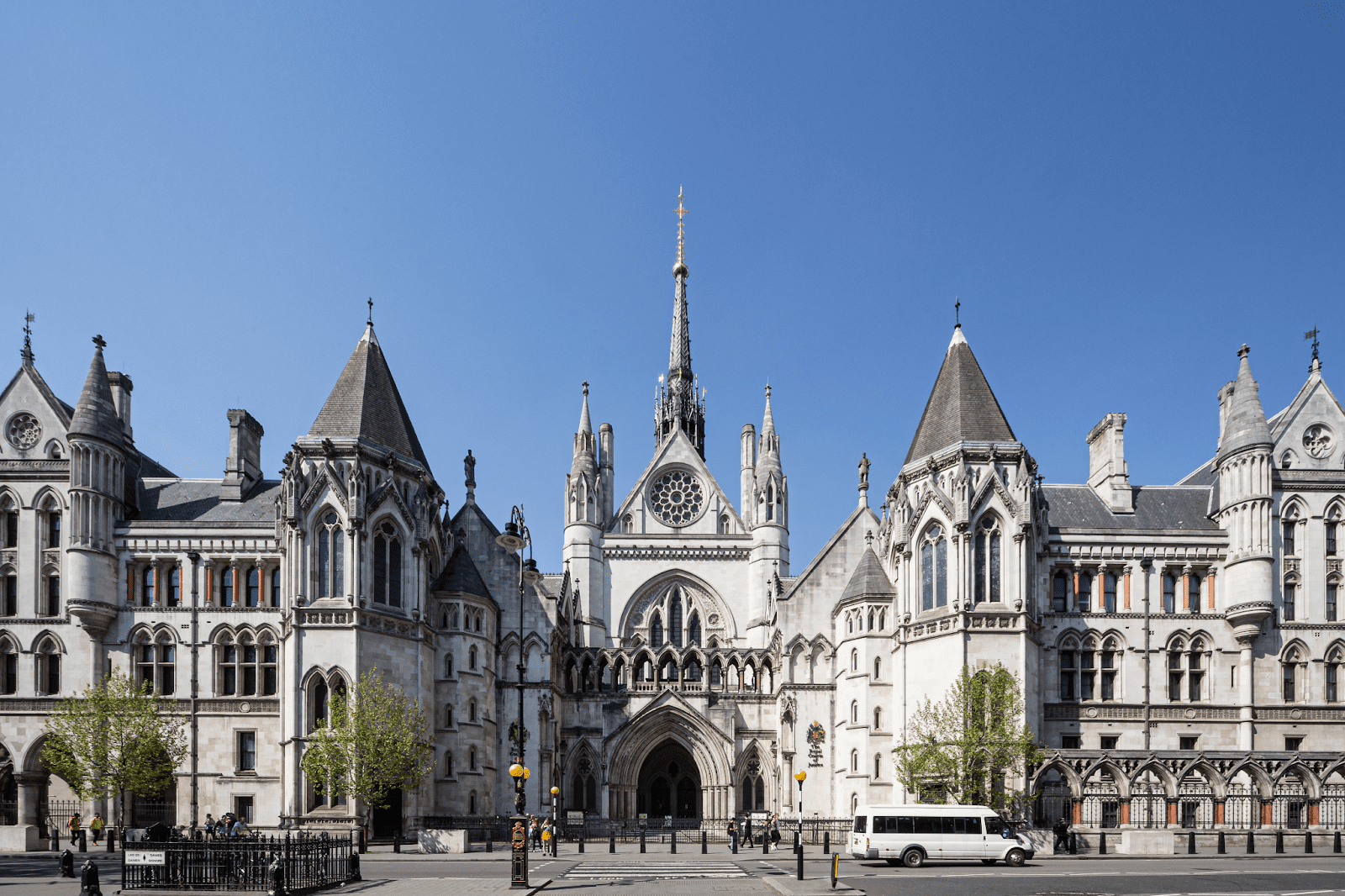
Wikipedia
History of the Founding and Development of the Royal Courts of Justice
In the 19th century, the UK required a specialised building for the courts, which had been housed in Westminster Hall for centuries. To achieve this, the royal treasury allocated approximately £1.5 million for the purchase of 6 acres of land on the Strand in London. Four hundred and fifty houses were demolished, and 4,000 residents were relocated. In 1866, 12 leading architects participated in a competition for the best design. George Edmund Street was declared the winner in 1868.
Construction of the Royal Courts of Justice began in 1874. Despite ambitious plans to complete it by 1880, the project was delayed due to disputes with workers and a lack of funding. A strike led to the hiring of German workers, who were housed and fed on the building site, and materials were delivered via an underground tunnel. It is believed that the exhausting work contributed to George Edmund Street suffering a stroke and dying before the official consecration of the building. His work was continued by his son, Arthur Edmund Street, and Arthur Blomfield.
The Royal Courts of Justice was officially opened by Queen Victoria on 4 December 1882. Specialising in ecclesiastical architecture, George Edmund Street designed the building in the Gothic Revival style. As a result, it is characterised by elements typical of mediaeval cathedrals: pointed windows, spires, and arches. The facility was constructed from 35 million bricks and faced with Portland stone at a cost of £1 million. Matching the scale of the Houses of Parliament, it features 1,000 rooms and 3.5 miles of corridors. Statues of Solomon, Jesus, and King Alfred the Great stand on the spires, with a statue of Moses behind them. They symbolise the foundations of English legal tradition.
In accordance with the new Judicature Acts in Great Britain, the Chancery Courts were merged with the Common Law Courts. Thus, the Supreme Court was created in 1875, which was divided into the High Court and the Court of Appeal. The former specialised in initial hearings for various types of cases, while the latter focused on hearing appeals for civil and criminal cases.
Initially, 19 courts operated within the Royal Courts of Justice. In 1968, it was expanded with the Queen’s Building, and in 1990, with the Thomas More Building annexes. This increased the number of courts to 60. In 2021, the facility was used as a Nightingale Court for criminal trials during the coronavirus pandemic.
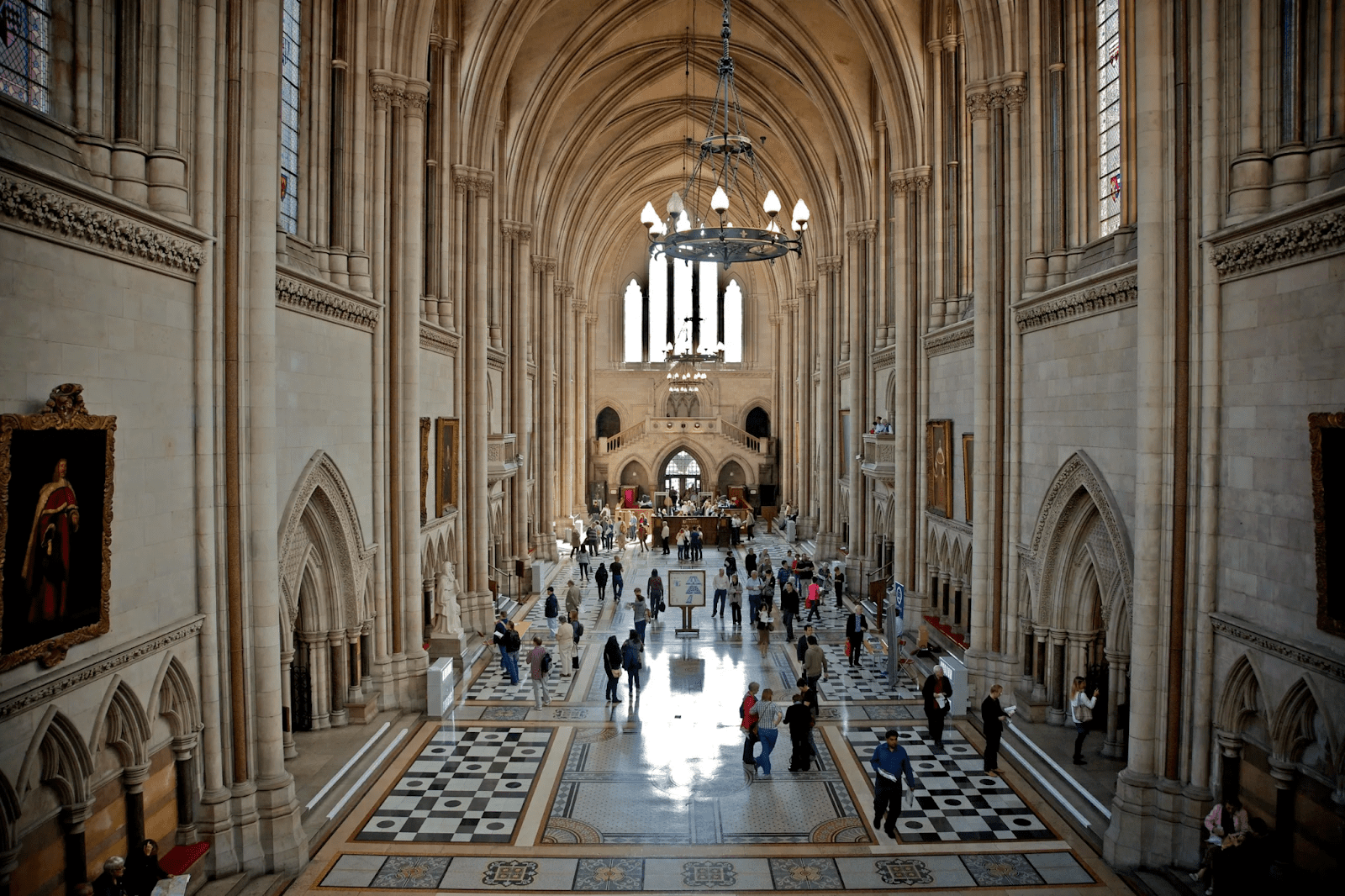
Historic London Tours
Recognition and Significance of the Royal Courts of Justice
The Royal Courts of Justice is an important part of Britain’s architectural heritage and a major tourist attraction. Notably, Nikolaus Pevsner considered it an example of free composition without losing structure, and Reginald Turner called it the last great representation of the Gothic Revival in secular architecture. Visitors are permitted to take a self-guided tour with leaflets and participate in mock trials. During Q&A sessions, they can interact with professional staff, learn about court advisors, see judges’ robes, and participate in dressing demonstrations. The cultural and historical value of the institution is recognised by its Grade I listing.
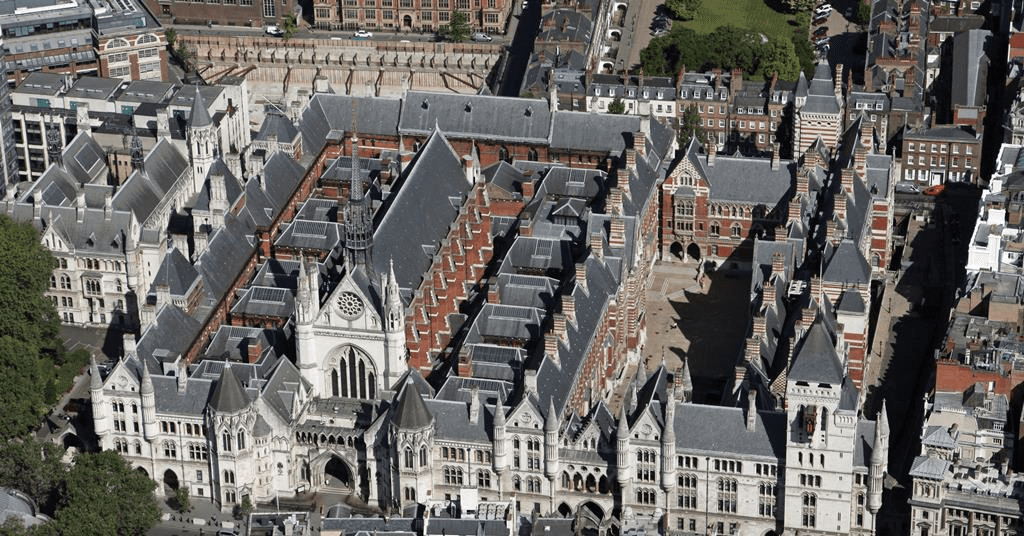
The Law Society Gazette