

The Royal Military Academy (RMA), a collection of Grade II listed buildings, is considered the world’s first educational institution for the training of artillery officers and engineers. It remains one of the most important examples of Gothic military architecture in the history of Great Britain. Read more at london-future.
History of the Founding and Development of the Royal Military Academy
In 1720, the Board of Ordnance decided to found an educational institution to train future officers of the new artillery regiment and the corps of engineers. Construction began using investments from the South Sea Company. However, the collapse of the company hindered the plan’s execution. It wasn’t until 1741 that the Royal Military Academy commenced its operations. Its goal was to provide professional training for cadets between the ages of 10 and 30.
Attached to the marching companies of the Royal Artillery, the cadets of the RMA formed their own company in 1744. Barracks in Woolwich, London, served as temporary accommodation until the construction of the cadet barracks near the south wall of the Woolwich Arsenal was completed in 1751. Initially, the core of the curriculum included mathematics and the scientific principles of artillery and fortification. For an additional fee, cadets could study French. Practical training covered gunnery, bridge construction, and storekeeping.
In 1783, discussions began about relocating the RMA from the Arsenal due to rapid development and lack of space. English architect James Wyatt took on the task of designing a new complex of buildings opposite the Royal Artillery Barracks. It was constructed between 1796 and 1805 in the style of Late English Gothic (Tudor Gothic Revival). The central building of the institution housed classrooms, a library, and offices, while the dining hall was located behind it. Arcadeways connected the central building to the residential wings on the sides. The three-storey central sections were allocated to officers, while the two-storey wings were for the cadets.
When the Board of Ordnance was abolished in 1855, the question arose of merging the Royal Military Academy with the Royal Military College in Sandhurst. A decision was made in 1936, but World War II intervened. Closed in 1939, the educational institution was effectively merged into the Royal Military Academy Sandhurst in 1947. Despite efforts to maintain the exterior of the remaining buildings, they fell into decline due to prolonged disuse. The site was deemed surplus in 2002 and closed in 2003.
In 2006, the Durkan Group digital agency acquired the former Royal Military Academy site. Construction and renovation work began in 2008. Emphasising the site’s uniqueness, the architectural design of the new buildings harmoniously integrates with the old structures. Thanks to collaboration with English Heritage, the historic buildings were restored and converted into apartments, duplexes, and townhouses. Ultimately, in 2019, 182 private homes, 62 shared-ownership properties, 23 rental units, and 61 properties for medical services were completed.
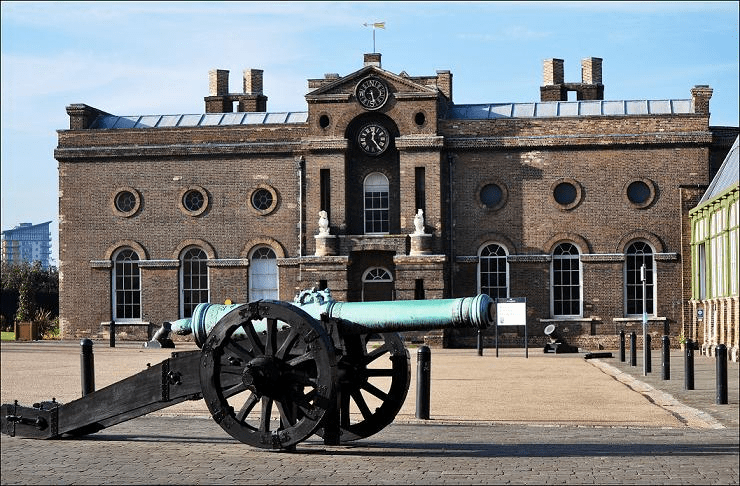
Military Wiki – Fandom
Recognition and Significance of the Royal Military Academy
The Royal Military Academy remains an outstanding example of James Wyatt’s Late English Gothic architecture. Its structures are considered not only an important architectural achievement but also one of the key examples of military buildings in Great Britain. The unique design harmoniously combines monumentality and functionality, underscoring their historical and cultural significance.
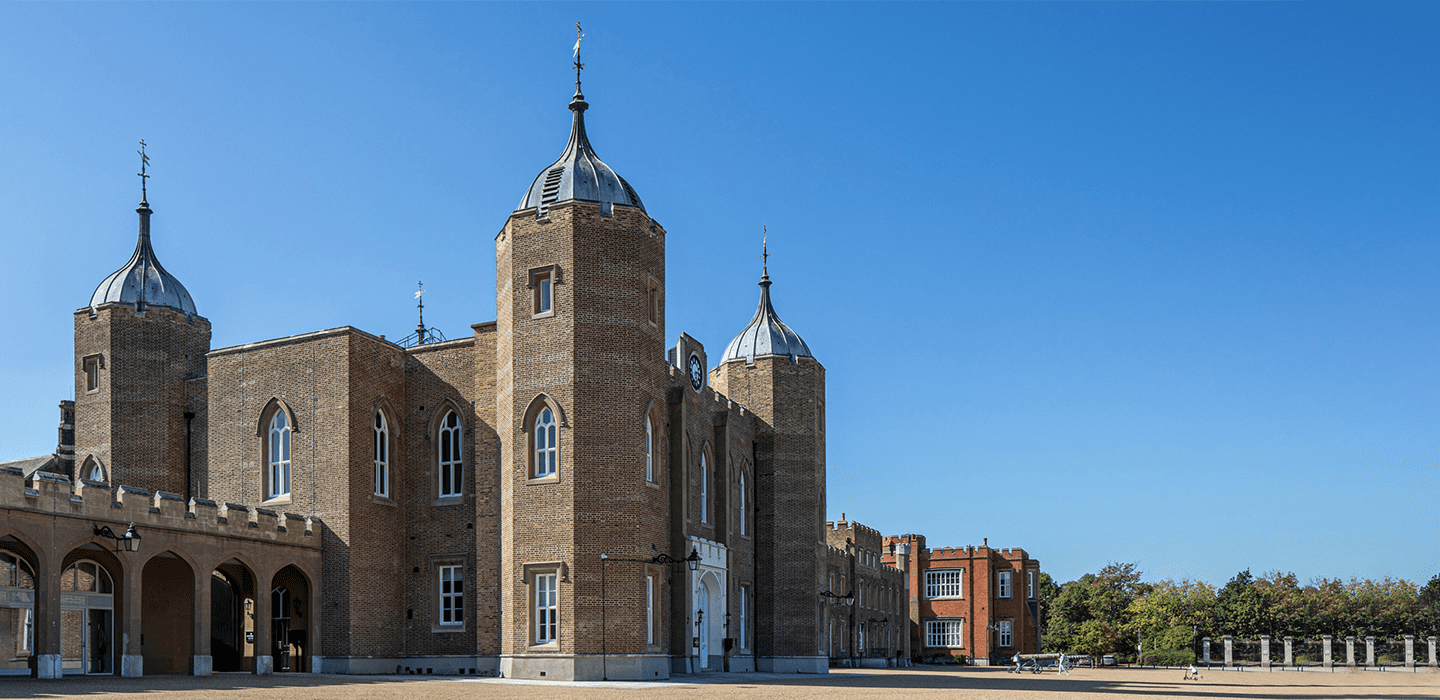
Durkan Homes