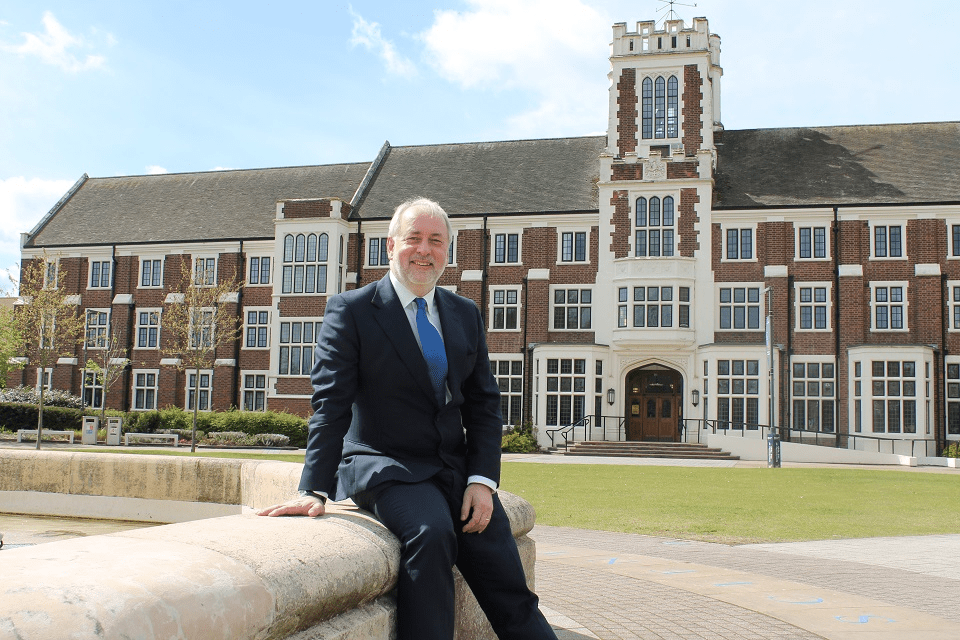
Nicholas Jennings is a leading expert in artificial intelligence, multi-agent systems, and cybersecurity. He’s one of Britain’s most prominent researchers in his field, having served as a government advisor, helped launch startups, and led one of the UK’s top universities. His work bridges science, public service, and entrepreneurship, forging new approaches to using technology for the public good. Read more on london-future.
The Early Life and Research Journey of Nicholas Jennings
Born in London on December 15, 1966, Nicholas Jennings began his professional journey in 1985 after finishing at Weymouth Grammar School. He enrolled in the University of Exeter to study computer science. It was there that he first discovered the world of AI, which at the time was still a very niche academic field. During his student years, the idea of creating ‘intelligent’ machines captivated him, setting the course for his entire career.
After earning his bachelor’s degree, Jennings moved to King’s College London in 1988, where he worked as a research assistant on an ESPRIT-2 European grant. He joined the large-scale ARCHON project, one of the first major research initiatives into multi-agent systems. For the young scientist, this wasn’t just a chance to combine theory and practice; it was also his first taste of working in international teams.
Over the next decade, Jennings rose from a PhD student to a full professor at Queen Mary University of London. In 1999, he joined the Department of Electronics and Computer Science at the University of Southampton, a department with nearly a hundred academics. There, he became part of the Intelligence, Agents and Multimedia research group, led by Dame Wendy Hall. When she was appointed head of the department, he took over as the group’s leader. The Southampton team was hugely influential in shaping the direction of computer science, both in the UK and on the global stage.
Beyond his work on agent systems and internet technologies, Jennings actively engaged in interdisciplinary research. In 2004, with his Southampton colleagues, he helped create a wireless sensor network to monitor climate change on the Briksdalsbreen glacier in Norway. The team developed unique sensors that could measure parameters like the glacier’s movement speed, temperature, and humidity levels.
From 2010 to 2015, Jennings served as the UK government’s first Chief Scientific Advisor for National Security. He focused not only on technology but also on humanities and behavioural sciences, aiming to understand the causes of radicalisation, the dynamics of terrorist threats, and how to prevent them. Under his leadership, he organised effective collaboration between various scientific fields, providing the government with the necessary knowledge for long-term decision-making.
However, after several years in government, Jennings decided to return to academia. In 2016, he joined Imperial College London as Vice-Provost for Research and Enterprise, and as a professor of artificial intelligence. This role gave him a strategic overview of all the university’s research areas, allowing him to set priorities and shape science policy at one of the world’s top higher education institutions.

The Recognition and Impact of Nicholas Jennings’ Scientific Work
Nicholas Jennings is one of the most influential British computer scientists of our time. He’s a true pioneer in the field of multi-agent systems and autonomous computing, and his research has been applied to national security, cyber defence, and climate monitoring. A significant part of his work has also been co-founding several successful startups, including Aerogility, Contact Engine, Crossword Cyber Security, Darktrace, and Reliance Cyber Science. His academic output is staggering: over 700 scientific publications, more than 100,000 citations on Google Scholar, and over 50 PhD students successfully supervised.