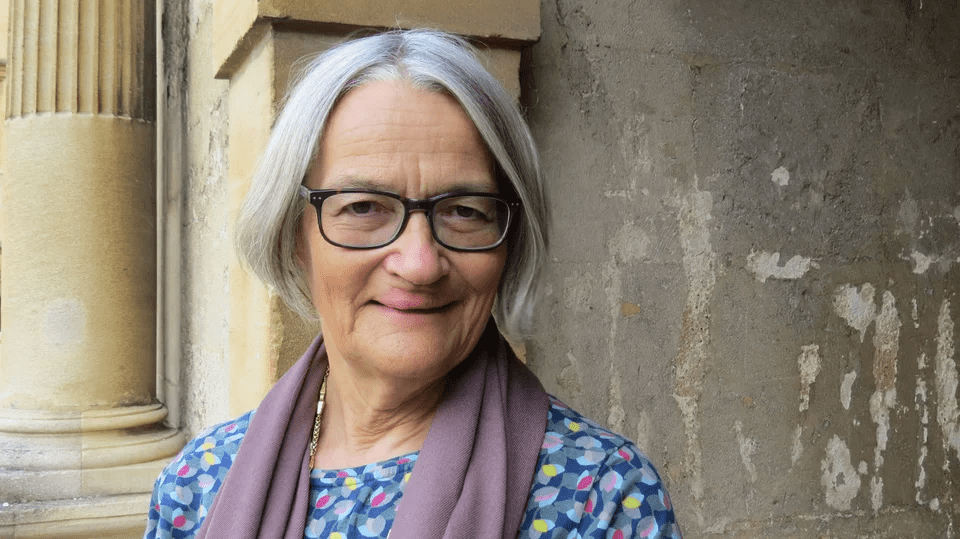
Ursula Martin is a well-known name in British academic circles. She was the first female Professor of Computer Science at Queen Mary University of London and one of the few who managed to combine a career as an inventor, lecturer, and public figure. Her work spans academic research, organising large-scale international projects, and actively promoting women in STEM fields. Read more on london-future.
Ursula Martin’s Early Life and Research Journey
Born in London on 3 August 1953, Ursula Martin’s path in science began at Malvern Wells’ Abbey College, where she laid the groundwork for a brilliant academic career. She earned her master’s degree from Girton College, Cambridge University, in 1975, followed by a PhD in mathematics from the University of Warwick four years later.
Her initial research focused on group theory, but she later became fascinated by string rewriting systems, which shaped the direction of her subsequent work. Martin held teaching and research positions at leading universities worldwide, including the University of Illinois, the University of Manchester, and King’s College London. She also expanded her knowledge and experience with academic visits to the Massachusetts Institute of Technology (MIT) and SRI International in Menlo Park.
A true breakthrough in her career came with her appointment at Queen Mary University of London. In 1990, she was awarded a personal chair at the university, becoming the first female Professor of Computer Science at the institution and only the second in the entire UK, after Elizabeth Hall from Ulster University. Equally significant was her appointment as a professor at the University of St Andrews in 1992. She became only the second woman in the university’s history, which dates back to 1411, to hold a professorial position. The first was historian Margaret Fairlie, who took on the role about half a century earlier.
From 2003 to 2005, Ursula Martin worked at the University of Cambridge’s Computer Laboratory, where she combined her academic activities with leading socially important projects. During this time, she headed the Women@CL programme, which, with the support of Microsoft Research and Intel Cambridge Research, became a platform for developing local, national, and international initiatives to support women in computer science. In her later career, she held a number of strategically important positions. From 2005 to 2009, she served as the Deputy Director for Science and Engineering, and from 2009 to 2012, she led the impactQM project, a pioneering knowledge dissemination initiative.
From 2014 to 2023, Ursula Martin directed a large-scale EPSRC research project called “The Social Machine of Mathematics.” The programme aimed to study mathematics as a collective activity where humans and computers interact, creating a new level of collaboration between artificial intelligence and human intuition. She also co-organised a series of prestigious Big Proof scientific programmes held at leading international research centres: the Isaac Newton Institute (2017 and 2025) and the International Centre for Mathematical Sciences (2019).

Recognition and Legacy
Ursula Martin is one of the leading contemporary British scientists in the fields of mathematics and computer science. Starting her journey with foundational research in group theory and logic, she gradually shifted her focus to formal methods and the role of computers in creating mathematical proofs. Her contributions have been recognised with numerous honours and awards: she is a Dame Commander of the Order of the British Empire (DBE), a Fellow of the Royal Academy of Engineering, the Royal Society of Edinburgh, and the Institute of Mathematics and its Applications.