

The most famous public place in Great Britain is Hyde Park. It is located in the very centre of London and has an interesting history and landscape. This place is very picturesque at any time of the year, attracting tourists and locals. Learn more at london-future.
The park covers an area of 350 acres and is a perfect place to spend time with family and friends. The path to its creation was difficult, long and full of historical events.
Royal Park
The history of Hyde Park began in the early Middle Ages with the founding of the Eia Manor. Due to its proximity to the Palace of Whitehall, the royal family got interested in the land of the modern Hyde Park. Since Henry VIII dissolved the monasteries, he could easily take the land from the church. Hyde Park was not only the king’s hunting ground but also had springs to provide London with drinking water. For example, the Tyburn brook flowed along one side of the park and provided high-quality water. The green oasis was private until 1603 when James I ascended the throne and let his courtiers visit it as well. In 1637, Charles I opened the park to the general public.
During the Great Plague, many townspeople who fled from infected areas of the city were accommodated in Hyde Park. Later, William III ordered the installation of 300 oil lamps there, creating the first road with artificial lighting. The park was also used by the Tudors, who built a banquet hall for holding balls and romantic getaways.
Elizabeth I used Hyde Park to review her cavalry troops and hunting. During her reign, people started to use carriages and the park became a place where the elite could show off their possessions. Under Charles II, the park became a more cheerful place because the king revived racing and introduced Riding in the Ring, a kind of speed dating event. The park was also used for military demonstrations.
Hyde Park transformation
Major changes took place in the park during the reign of Queen Victoria and they were led by landscape architect Decimus Burton. He worked on increasing the area, planning new alleys, green areas and the Serpentine Lake. It was created in 1730 and became a perfect location for recreation for different classes of the population.
In the 19th century, Hyde Park became a place of freedom of speech. Until 1783, the Tyburn Gallows was located just outside the park. Each convict could have his last word and say whatever they wanted. When the gallows were closed, the tradition of public speaking was preserved and a part of Hyde Park called Speaker’s Corner became a place where Londoners could speak up. The park witnessed speeches by Karl Marx, William Morris and Vladimir Lenin. The corner played an important role in the suffragette movement. Sylvia Pankhurst and her supporters held many rallies there in the early 1900s.
Hyde Park today
In the 20th century, the local surviving stables became riding schools. The most famous of them was the Cadogan Riding School, owned by the Smith family. Horace Smith taught riding to members of the royal family, including young Queen Elizabeth II.
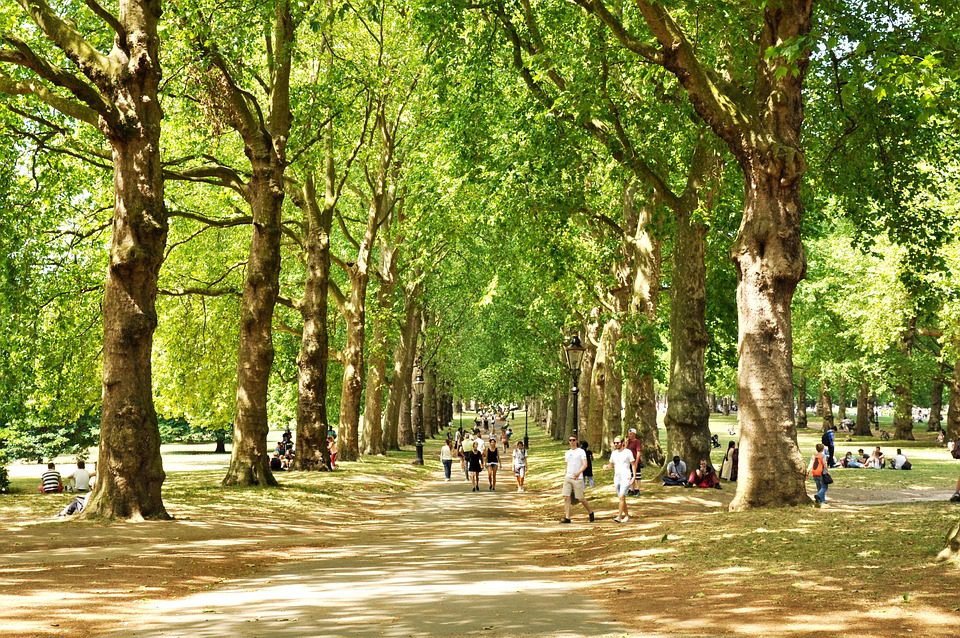
Gradually, the park became an integral part of Londoners’ lives and a green oasis among large buildings. There is a riding school, rollerblade rentals, bowling and tennis. It also holds tours and performances by such celebrities as Madonna and the Rolling Stones. The park is a great place to celebrate religious and national holidays, play sports or have dinner with friends in cosy cafes.
It is worth noting that the park has preserved its natural landscapes and features modern installations. One of them is the Diana, Princess of Wales Memorial Fountain opened in 2004. It is a perfect place for contemplation. Thus, Hyde Park is not only a beautiful location but also a place of historical significance and freedom.