

Ernest William Lyons Holt, a naturalist and biologist, is considered a key founder of marine research in Great Britain. Journeying from the North Sea to the Mediterranean, he developed innovative methods for studying aquatic ecosystems. Read more at london-future.
Early Life and Scientific Beginnings
Ernest William Lyons Holt was born on 17 October 1864 in London. As a teenager, he attended Eton College, the famous British private school for boys. While there, the keen student’s achievements were recognised with a prize in biology.
Having decided on a career in the British Army, Ernest William Lyons Holt continued his education at the Royal Military College, Sandhurst. His officer training enabled him to join the Duke of Cornwall’s Light Infantry. In 1884, as a lieutenant, he took part in the Nile Expedition, and in 1886, he served in the Third Anglo-Burmese War. However, declining health forced him to resign his commission and return to civilian life.
Following this, Ernest William Lyons Holt began studying biology and became an assistant at the University of St Andrews. In 1890, he was appointed assistant naturalist on a survey of the fishing grounds off the west coast of Ireland, led by William Spotswood Green. As a result of their joint efforts, the government formally established a programme to study the fishing industry in 1892. William Spotswood Green was appointed Chief Inspector, while Ernest William Lyons Holt became the scientific advisor.
The next stage of his career involved him joining the Marine Biological Association in Grimsby. Tasked with studying the North Sea, Holt travelled to the Marseilles Zoological Station in 1894. Following this, he spent three years at the Plymouth Marine Laboratory, where he studied ichthyology and invertebrates. Returning to the roots of his research, the scientist took charge of the first Irish marine laboratory in 1899. In 1900, this laboratory was brought under the control of the newly formed Department of Agriculture and Technical Instruction for Ireland.
Working alongside William Spotswood Green, Rowland Southern, and George Philip Farrar, Ernest William Lyons Holt became an Inspector of Fisheries in 1908. Together, they continued to survey the west coast of Ireland on the vessel ‘Helga’, and later on the ‘Helga II’. In 1909, the new ship, built to the scientists’ original specifications, was used in the Clare Island Survey.
Replacing William Spotswood Green, Ernest William Lyons Holt was promoted to Chief Inspector in 1914. However, the First World War brought a halt to his research activities. In the post-war period, his deteriorating health prevented him from returning to work. After moving from Dublin to London, he died on 10 June 1922 from glomerulonephritis.
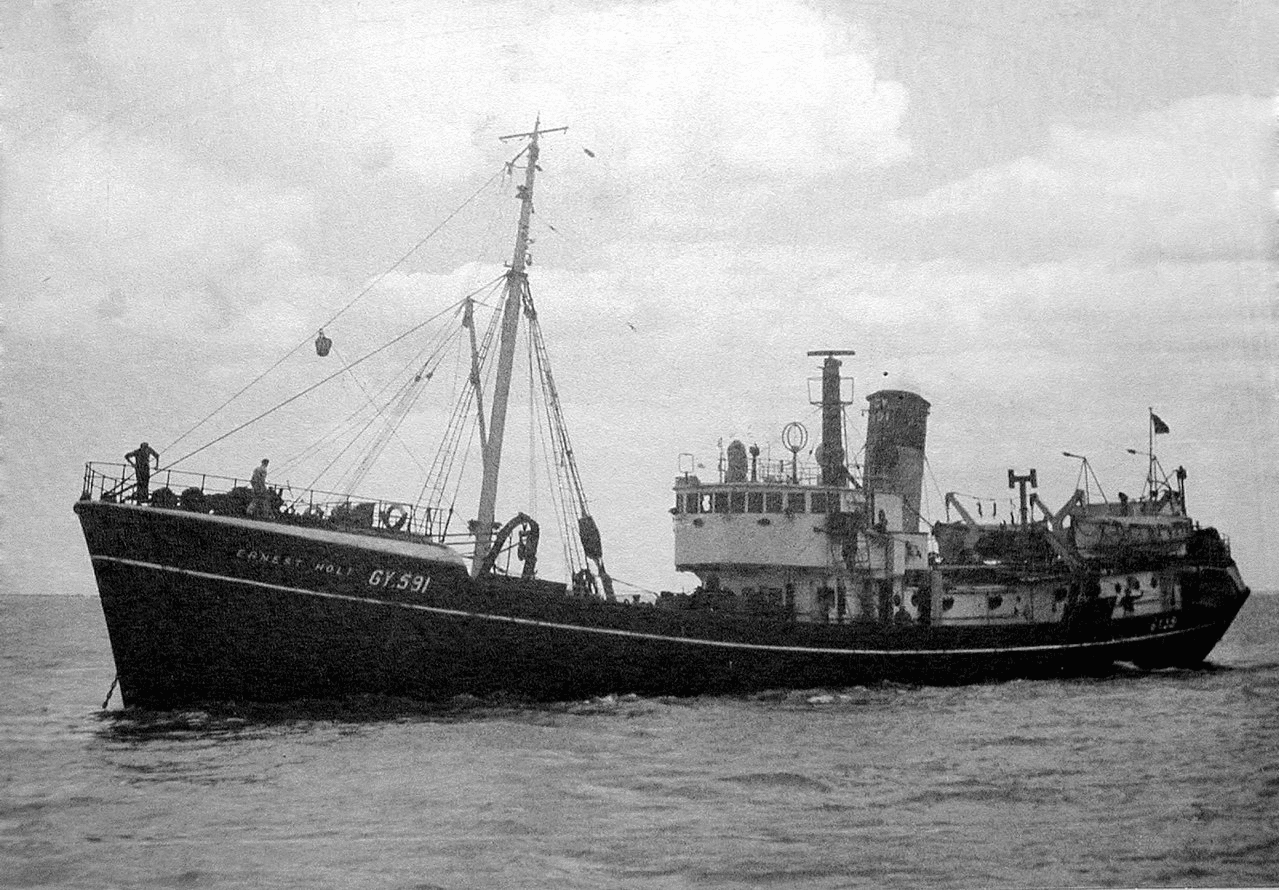
Wikipedia
RV Ernest Holt
Recognition and Legacy of Ernest William Lyons Holt’s Work
Ernest William Lyons Holt made significant contributions to the development of marine research methodology. Throughout his career, he worked at the North Sea research station, the Marseilles Zoological Station, and Ireland’s first marine laboratory. The biologist’s numerous publications covered fish studies, fisheries and the fishing industry, marine ecosystems, and methodological papers. Furthermore, his expedition reports detailed the results of the Clare Island Survey, studies of the west coast of Ireland, and the marine fauna of the North Sea. A research vessel was later named in his honour.
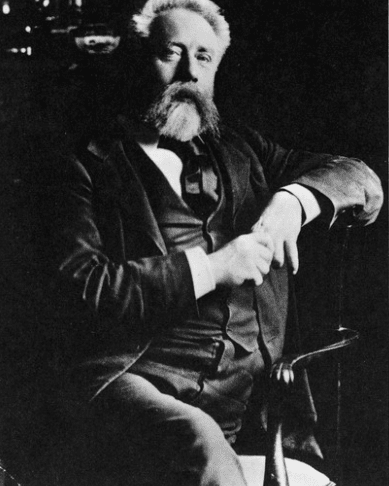
Alamy