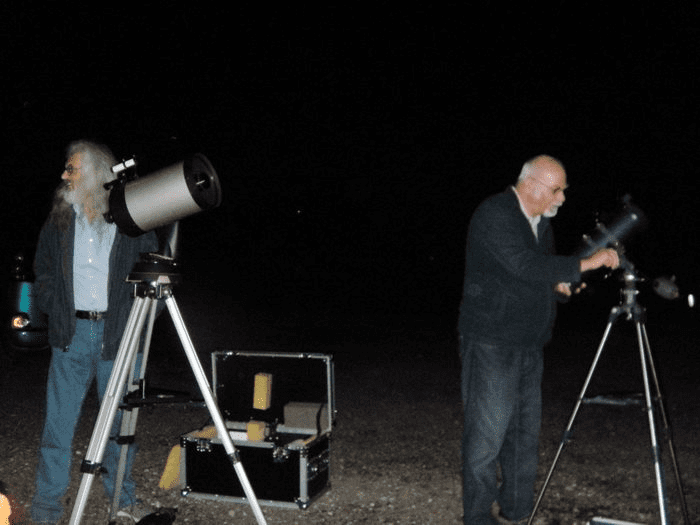
The Astronomical Society of Haringey (ASH) is a shining example of a successful community-led initiative that brilliantly fuses scientific outreach, cultural activity, and technical innovation. Over five decades, it’s been at the forefront of observing celestial events, organising engaging lectures, and even creating its own media projects. Today, the society remains an open and welcoming hub for anyone fascinated by astronomy and space exploration. More on this incredible story to follow on london-future.
The Foundation and Growth of the Astronomical Society of Haringey
The story of the Astronomical Society of Haringey began with a pivotal event in 1970. It was in that year that Fred Clarke organised the “Space Age Exhibition” at the Wood Green Arts Centre. Among the notable attendees was Patrick Moore, the renowned astronomer and host of the iconic BBC programme The Sky at Night. Impressed by the local residents’ keen interest in space, he suggested that the London borough should establish a society to unite astronomy and space enthusiasts. The idea quickly gained traction.
The inaugural meeting of ASH took place in 1972. What made this event truly special was the attendance of Arthur C. Clarke—the celebrated science fiction author and brother of the exhibition’s founder. He addressed the attendees and readily accepted the offer to become the patron of the newly formed organisation. From its very first days, the society aimed to embrace a wide spectrum of interests, reflecting the comprehensive approach of its patron. The organisation’s areas of focus included astronomy, astronautics, cosmology, science fiction, fantasy, and the latest technologies related to space exploration.
Initially, the Astronomical Society of Haringey meetings were held at Alexandra Palace, both before and after the devastating fire in 1980. There were even ambitious plans to establish a permanent base there: the aim was to transform the North-West Tower into an observatory and a small planetarium. These plans were intended to be part of a larger project by the Astronomical and Space Education and Research Trust (ASERT), which aimed to popularise science among the general public. However, the 1990s brought structural changes to the management of Alexandra Palace, and the education centre project sadly never came to fruition.
At the dawn of the 21st century, ASH’s activities gained new momentum, blending the traditions of previous decades with modern technology. One of the most spectacular events was the first of the two transits of Venus this century, which occurred in 2004. To mark the occasion, the society set up observing equipment on the grounds of Ashmole School, allowing everyone interested to witness this unique celestial phenomenon. The following year, ASH members embarked on two memorable excursions: one to the National Space Centre in Leicester and another to Woolsthorpe Manor, where Isaac Newton was born and conducted his first scientific experiments.
In 2016, the Astronomical Society of Haringey collaborated with the production company Pollen House Pictures to create a short film on an astronomical theme. Local schoolchildren were involved in the project, not just acting, but also helping to write the script. The film, entitled “Out of this World,” runs for just under three minutes and is available to watch on YouTube. Viewers can enjoy fascinating footage of Jupiter, the Moon, and the International Space Station as it flies directly over observers’ heads.
Recognition and Significance of the Astronomical Society of Haringey
Thanks to its open nature, educational mission, and constant drive to spread a love for the cosmos, ASH has earned a reputation as an important cultural and scientific hub in the region. In the contemporary landscape, it continues its active work, holding meetings for nine months of the year. The programme features lectures, observing nights, and public events involving both society members and invited speakers. The organisation maintains its own collection of telescopes and regularly conducts observations near its main North London meeting venue.