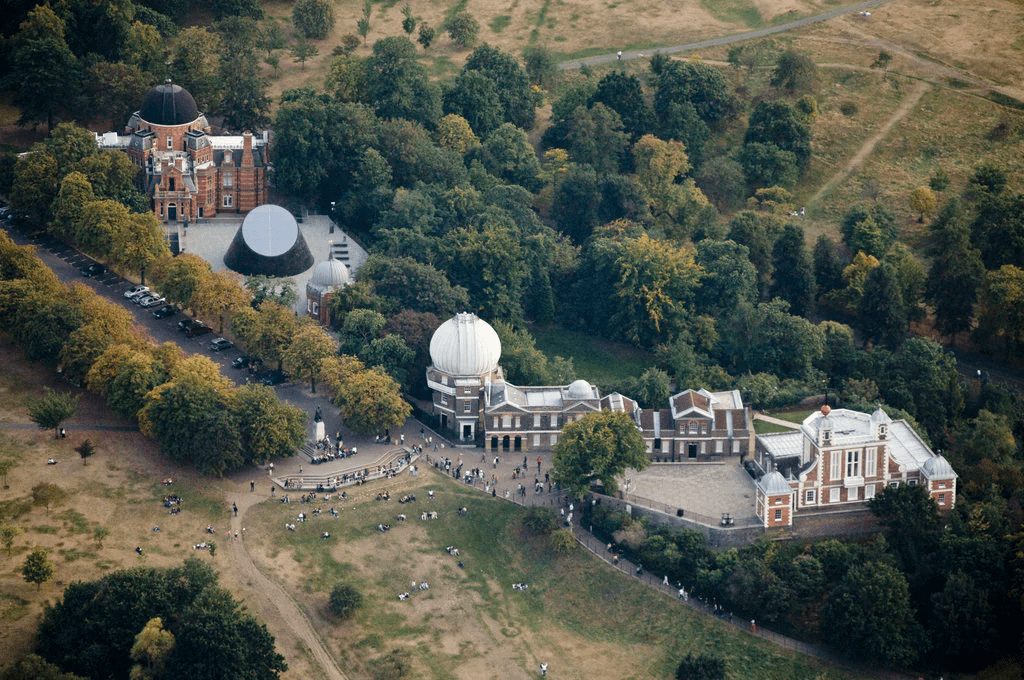
The Royal Observatory was the first dedicated scientific institution in Great Britain focused on astronomy and navigation. It’s the very place where the foundations of Greenwich Mean Time (GMT) were laid and the Prime Meridian was established—the reference point from which all longitude is measured and global time is synchronised. Despite the light pollution of modern-day London, the observatory’s original site remains a window to the cosmos, introducing new generations to the mysteries of the starry night. Read more on london-future.
A History of Foundation and Development
In 1675, King Charles II founded the Royal Observatory in Greenwich Park, London. Its purpose was highly practical: to reduce the number of shipwrecks caused by the inability to accurately determine a ship’s position at sea. At the time, sailors could work out their latitude from celestial bodies, but longitude remained a mystery. This led to countless disasters as ships unexpectedly crashed into rocks.
A breakthrough in maritime navigation only came in the 18th century. In the 1760s, a method for determining longitude using observations of the moon—the so-called “lunar distance method”—emerged. The English clockmaker John Harrison spent more than two decades creating a marine chronometer that could keep precise time at sea. Its effectiveness was also evaluated by Nevil Maskelyne, who became Astronomer Royal in 1765 and reorganised the activities of the ROG. For his part, he initiated the creation of the first Nautical Almanac, which made it much easier for sailors to calculate longitude and quickly gained popularity worldwide.
The next significant phase in the ROG’s development began in 1835 with the arrival of George Airy. Thanks to his managerial talent, engineering approach, and administrative discipline, the observatory was transformed into a highly efficient scientific centre. He reformed the organisation of work, created a new system of observations, and reinstated meteorological and magnetic research. It was under his leadership that the institution acquired numerous new telescopes, bought with both public funds and private donations.
By the 19th century, the conditions for astronomical observations in London were rapidly deteriorating. Industrialisation, smog, and increasing city lighting made high-quality studies of the night sky impossible. The need to move the ROG was becoming ever more obvious. In 1933, the newly appointed Astronomer Royal, Spencer Jones, initiated a plan to relocate the observatory to a more favourable rural location. After receiving official approval in 1946, it was decided to move the institution to Herstmonceux in East Sussex. The move took place between 1947 and 1958, after which the institution became fully operational in its new location under the new name, the Royal Greenwich Observatory (RGO).
In 1965, the creation of the Science Research Council (SRC) brought the funding of astronomy in Great Britain together for the first time. Although it retained its scientific functions, the RGO building gradually lost its autonomy. By 1974, its responsibilities had changed significantly: a large part of its resources were no longer directed towards its own internal research but towards supporting university programmes. The observatory’s own research activities became auxiliary and had to be carried out in partnership with academic institutions.
Further changes were announced in 1986 with the relocation of the RGO to Cambridge. This decision sparked outrage among the scientific community. Some staff agreed to the move between 1989 and 1990, but the organisational structure was already beginning to change. In 1997, a new government body—the PPARC—reorganised the SERC and made the final decision to close the observatory. Scientists’ pleas to save it were unsuccessful. In October 1998, after 323 years of existence, the institution officially ceased its operations.
Recognition and Importance of the Royal Observatory’s Work
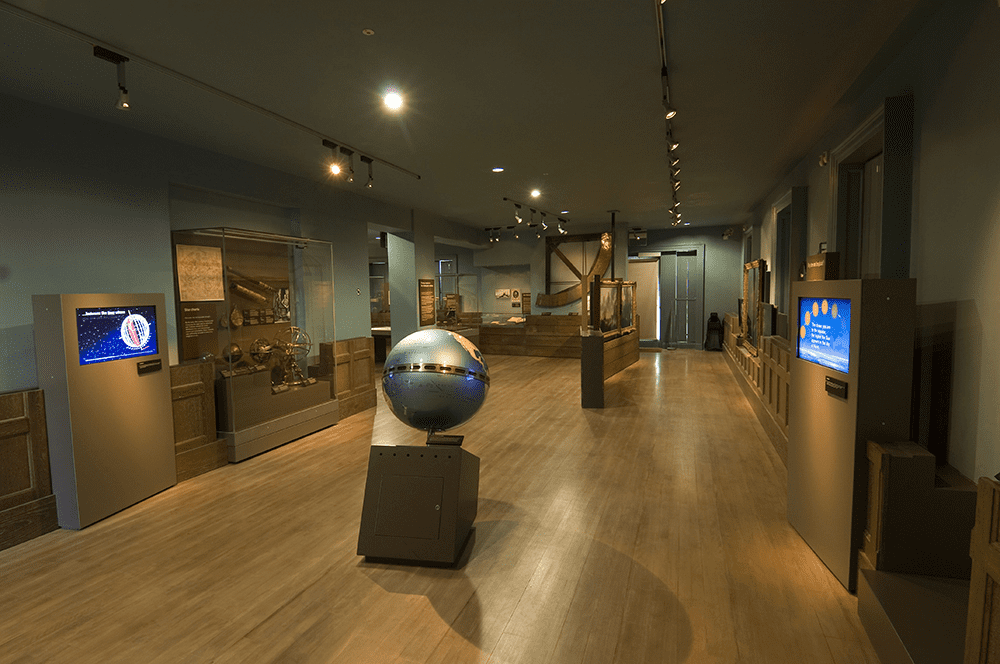
The work of the Royal Observatory laid the foundation for practical astronomy, contributing to safer seafaring through the improvement of navigation methods, accurate timekeeping, star observations, and the publication of nautical almanacs. It’s where the concepts of Greenwich Mean Time (GMT) and the Prime Meridian—the fundamental reference points for the international coordinate system—originated. In a modern context, the original observatory functions as a museum, an educational centre, and a national symbol of British astronomy. Over the years, it has survived several relocations, modernisations, and reorganisations, ultimately becoming an integral part of the UK’s scientific heritage.