

There are a lot of old and beautiful buildings in London. They reflect the city’s atmosphere, charm and sophistication. Each architectural element combines the past and the present. It has always attracted tourists and appealed to local residents. Learn more at london-future.
The Royal Festival Hall is considered the residence of the London Philharmonic Orchestra. It is the heart of the capital of Great Britain as well as a cultural symbol that preserves unique moments of local history with its secrets and special architectural solutions.
History
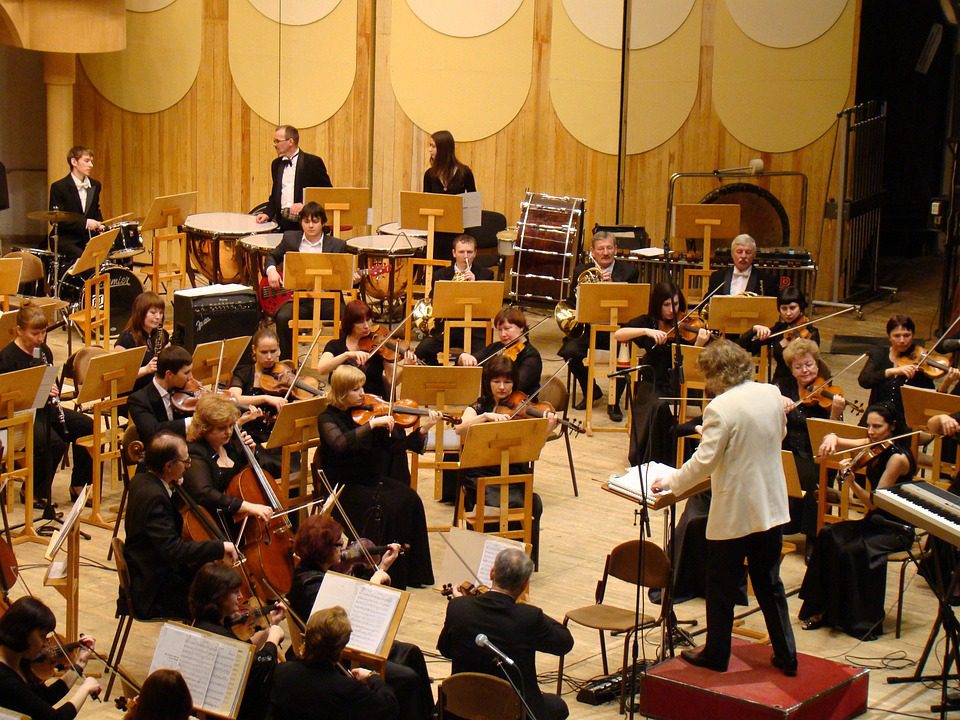
Before delving into the architectural and historic features of the Royal Festival Hall, it is worth noting that even though it doesn’t have the “philharmonic” part in its official name, it is considered the home of one of the most famous philharmonic orchestras in London. The hall is located on the South Bank of the River Thames, in the very centre of the city. The building is a Grade I listed architectural monument, which regularly hosts concerts by the Philharmonia Orchestra, the London Philharmonic Orchestra and the London Sinfonietta.
The hall was officially opened in 1951 and symbolised the optimistic mood of the post-war period. The project was led by Robert Matthew, the chief architect of the London County Council. He gathered a young and ambitious team of outstanding designers to bring the idea of a modern building to life. Specialists took into account new acoustic and architectural aspects that helped to obtain the best sound quality in a large hall with more than 2,700 seats.
Architectural solutions
The engineers used reinforced concrete, the most popular material for modernist buildings, for the construction of the hall. There were also luxurious elements, such as beautiful woodwork and petrified limestone from Derbyshire. The hall fully corresponded to the principles of modern architecture and democracy because it didn’t divide visitors into different classes and had a large foyer instead of cramped lobbies. Excellent acoustics were reached thanks to soundproofing elements. To ensure balance and clarity of sound, specialists installed reflective surfaces around the stage and wooden panels to absorb low frequencies.
The perfectly harmonious furniture was designed by Robin Day. The hall was gorgeously illuminated at night. Visitors often just stood in the foyer to feel that magical atmosphere.
Obviously, active operation affected the condition of the building, so it was decided to reconstruct the Royal Festival Hall in 1994. Specialists drew up a conservation plan, referring to the original drawings. Several improvements were made, including the acoustics. In particular, they changed the geometry of the stage so that the singers could hear each other better. After the renovation, the building didn’t lose its original character. Designers chose carpets with original patterns, cleaned the tapestries and dragged the original chairs.
Secrets of the building
The large building has its small secrets. There are hidden rooms in the corridors and under the stage that store musical instruments, archives as well as monuments and statues that once adorned the South Bank. Some of the interesting artefacts stored in the secret rooms are a lion from the old Lion Brewery and a bust of Nelson Mandela.
The hall also has its own eerie stories or even legends and myths. Visitors have repeatedly said that they feel someone’s presence in the empty corridors. Such a mysterious atmosphere attracts tourists and romanticizes the place.
The Royal Festival Hall is not only an architectural masterpiece but also a symbol of a rich musical history. The building hides various mysteries of the past, which add a unique accent to its image.