
London is a city where inspiration and creativity are woven into the very fabric of daily life. The cradle of celebrated writers, painters, actors, and visionaries, it sparks bold ideas during a simple stroll through historic streets and parks, or while admiring iconic architectural landmarks. Yet art can also emerge in the most unexpected environments—including the realm of heavy industry. Across the British capital, sites that once served purely utilitarian purposes have found a second life thanks to bold architectural reinvention. Transforming industrial giants into cultural masterpieces is an art form in itself, and Battersea Power Station stands as its ultimate expression. How did this legendary landmark evolve, and why is it now celebrated as a symbol of an innovative, forward-looking London? Read on at london-future.
Battersea Power Station: A Defining Chapter in London’s History
Looking back across the power station’s storied history reveals just how profoundly it influenced the development of the British capital. The project officially got underway in 1929, when a team of prominent architects stepped in—most notably Sir Giles Gilbert Scott, famous for designing Britain’s iconic red telephone box. The team crafted an ingenious design that determined the building’s destiny, establishing it as one of the largest brick structures in the world. Construction of the first phase, Battersea A, was completed in 1935.
The decades that followed were marked by dramatic turns. Work on the second station dragged on and was eventually halted by the outbreak of the Second World War. Notably, the complex survived the Blitz virtually unscathed: the dense plumes of white steam served as an unmistakable navigational beacon for pilots, including enemy aviators. The second phase, Battersea B, finally came online in 1955. That milestone saw the addition of the fourth chimney, bringing the plant to its peak generating capacity and marking the grand project’s long-awaited completion. The subsequent years brought both triumphs and decline, until power generation officially ceased in 1983. Yet for this colossal landmark, decommissioning proved to be just the beginning of an entirely new chapter.
Architectural Highlights
Far from an ordinary industrial plant, the power station captivated onlookers from day one with its remarkable aesthetics. The chimneys are a standout feature: originally planned as square structures, they were ultimately built in their now-iconic fluted circular form. The chimneys themselves rise 50 metres, with their summits reaching an impressive 101 metres above the ground, giving Battersea Power Station its monumental, cathedral-like presence. The station’s first block showcases lavish Art Deco styling. The turbine hall was finished in Italian marble, while polished parquet flooring and intricate wrought-iron staircases run throughout the interiors.
A Symbol of the New London
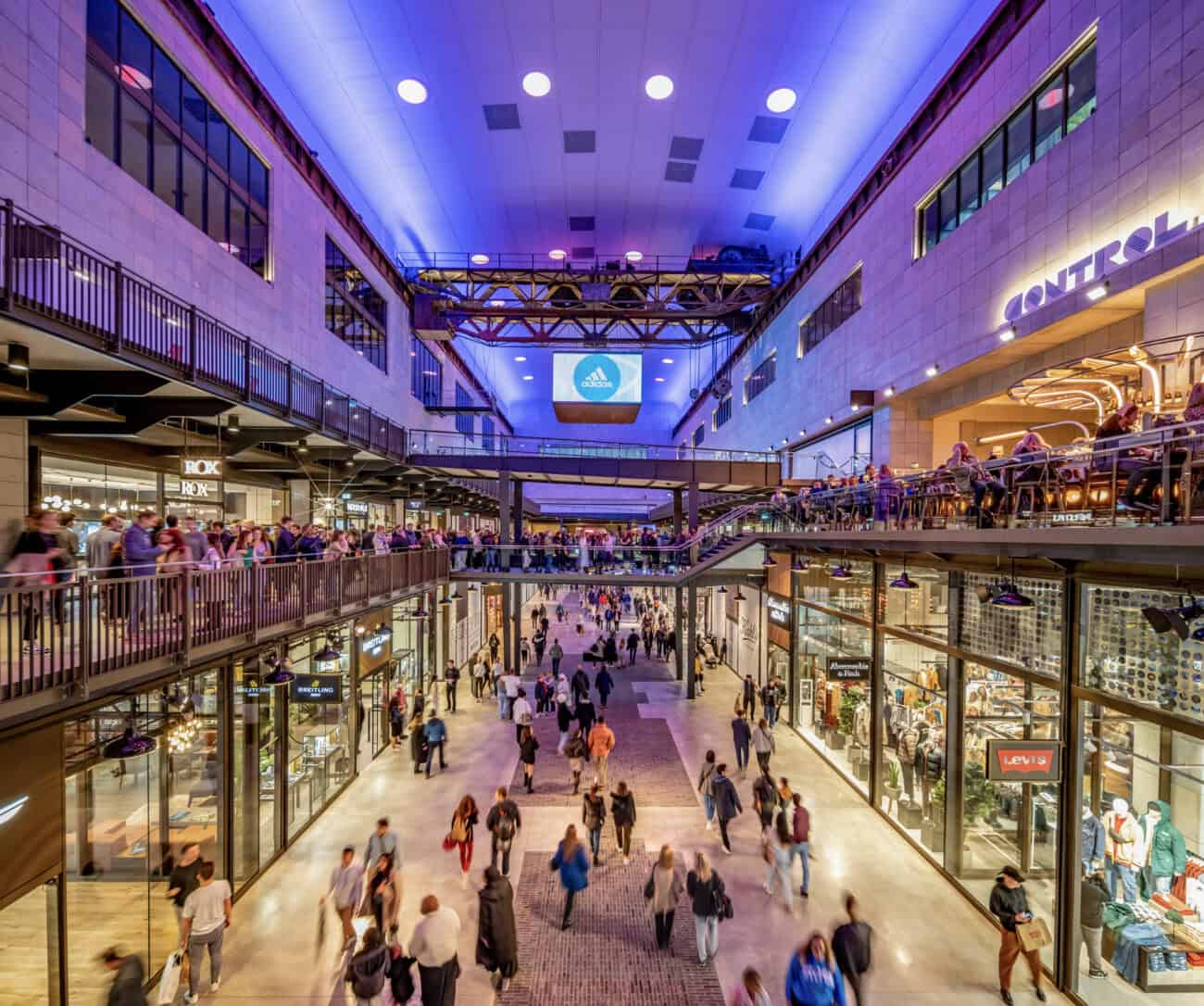
Following its decommissioning, preserving the complex as a piece of national heritage became an urgent priority. Because the station was designated a listed landmark, any redevelopment had to proceed with extreme care and obtain strict regulatory approvals. Over the decades following the shutdown of Battersea B, numerous master plans and developers came and went. The road to renewal was fraught with engineering hurdles, including severe degradation of the chimneys, the delicate dismantling of unsafe structures, and the risk of foundation flooding. After decades of ambitious concepts, the reborn Battersea Power Station opened its doors to the public in 2022. Today, it brings together residential apartments, bars, restaurants, corporate offices, retail spaces, and vibrant leisure venues. It has become a true emblem of modern London—one that honors its industrial heritage while boldly embracing the future.

