

Prostitution is a phenomenon that has been present in societies across the globe throughout human history. Different eras have brought varying laws and government responses to the emergence of brothels and the spread of street prostitution. Despite prohibitions and penalties, brothels continued to exist, and today, some cities feature specific districts where these services are prevalent. What spurred the development of this industry in the capital of Great Britain? What were the key characteristics of this activity in the 17th century? What secrets are hidden within the history of one of the most famous brothels, not just in London, but in all of England? Find out more at london-future.
General Trends in Prostitution during the First Half of the 17th Century
Prostitution remained a persistent issue in London throughout history, though the authorities’ approach to the matter changed. Specifically, the early 17th century was defined by laws introduced by James I. Prostitution was considered a shameful occupation, and penalties were established for such activities. Measures were primarily aimed at the clients. Men who visited brothels and used these services were often branded with marks on their bodies—most famously the letter ‘R’—which degraded the individual and classified them as an offender. Later, a similar punishment was proposed for the women providing the services. Furthermore, on the King’s initiative, raids were carried out in the 1620s. While these efforts did not achieve overall success, some brothels were closed and their owners arrested.
In 1625, Charles I ascended to the throne. His policy on the issue was somewhat similar to that of the previous monarchs. Until 1649, relevant laws were also enforced, intended to halt the growth of this activity. Instructions given to the relevant bodies launched a series of specific actions aimed at combating prostitution in general. Yet, the period of Charles I’s rule was ironically marked by the flourishing of brothels in the British capital.
The Rise and Fall of Holland’s Leaguer
The existence of one of the city’s most notorious brothels coincided with the reigns of these two kings. Holland’s Leaguer opened its doors in 1603. Its owner was Elizabeth Holland, and the brothel’s name is likely derived from hers. The establishment stood out from others, primarily due to the high price of its services. However, the level of comfort was equally exceptional. Clients were offered delicious meals and a luxurious atmosphere. The brothel was also known for its relative cleanliness, featuring (for the time) modern plumbing and an ample supply of fresh linen. Its clientele included Dukes and other high-ranking members of society. Although James I implemented regulations to close such houses, it was rumoured that he himself visited Holland’s Leaguer. The brothel was located in the former Old Paris Garden estate. The spot was quite appealing, as it was near a number of theaters, and one of the brothel’s distinctive features was its stunning view of the River Thames.
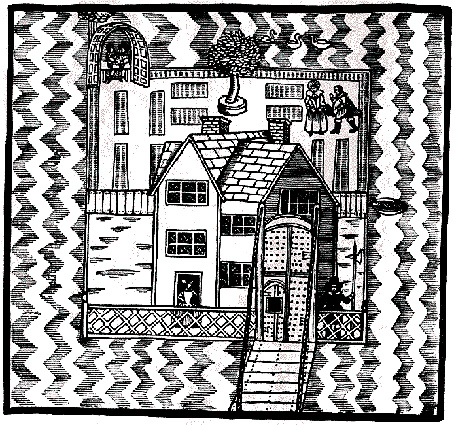
The story of this place came to an end in 1632. However, the closure of the brothel was no less dramatic than its operation. Much of the tale revolves around the bridge that led directly to Holland’s Leaguer. In general, almost all of London’s bridges boast a unique history and symbolism. This time, the bridge also played a crucial role. Holland’s Leaguer, situated near Old Paris Garden, was surrounded by a moat and, naturally, had a drawbridge. When, under Charles I’s directive, authorities sought to destroy the brothel, the owner simply raised the bridge, and everyone inside the building reportedly dumped filth and sewage onto the soldiers below. Attempts to close Holland’s Leaguer lasted about a month. Following the final, successful raid, the owner managed to escape and open a new establishment elsewhere.