

Soho is widely regarded as London’s most famous district, located right in the heart of the West End. It’s renowned for its vibrant nightlife, first-class restaurants, and rich history. This unique area of the capital attracts visitors with its beautiful architecture, numerous shops, and galleries.
At night, the area’s bars fill with a diverse crowd of students, tourists, and locals. Its sizzling nightlife and atmosphere of fun are a major draw for Londoners. Read more at london-future.
Origins and History
The name “Soho” first appeared in the 17th century and is believed to originate from the hunting cry “so-ho,” used in the area back in the 16th century. At that time, the land was King Henry VIII’s royal hunting ground. The area’s subsequent development as a residential district is closely linked to the work of the urban developer Gregory King.
Later, the area became a refuge for French Huguenots, and in time, it also became home to various immigrant communities, including Greeks and Italians. This legacy is still visible today: you can find French and Italian restaurants and delis, while Gerrard Street is the heart of London’s Chinatown, showcasing the integration of its many communities.
As the population grew, a new church was built, and in 1687, the Parish of St Anne was established. This parish covered all of what is now eastern Soho, including today’s Chinatown. It is worth noting that the district has never had clearly defined administrative boundaries.
By the mid-18th century, the aristocrats who had settled in Soho moved on to more fashionable districts, such as Mayfair. By the 19th century, the gentry had almost vanished, replaced by prostitutes, music halls, and small theatres. The population soared, reaching 327 residents per acre by 1851, making it one of London’s most densely populated slums. A significant event in its history was the 1854 cholera outbreak. It was famously discovered that the source of the outbreak was a water pump contaminated by sewage. In response to the area’s health crises, many hospitals were established, along with businesses selling basic necessities.
Soho in the 20th Century
In the early 20th century, the restaurant trade expanded significantly. The area’s reputation improved following the construction of new theatres along Shaftesbury Avenue and Charing Cross Road, as catering to theatre-goers boomed. The district became a hub for London’s art and music scene. Jazz clubs began to open, most famously ‘Ronnie Scott’s Jazz Club’ in 1959. Soho is also synonymous with the birth of British rock ‘n’ roll, with many famous bands playing gigs in local clubs at the start of their careers.
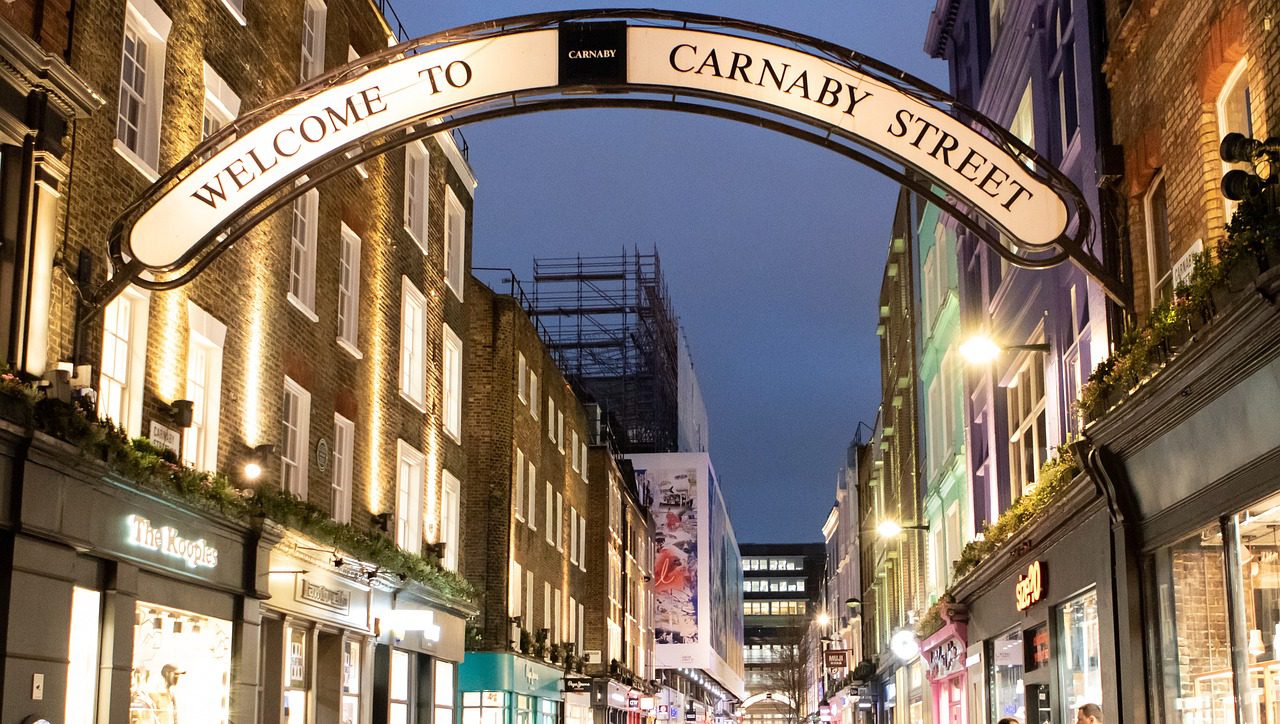
From the 1980s, Soho began to gentrify. A housing association was founded in 1978 to provide affordable rented accommodation, and by the 21st century, it had acquired around 400 flats. St Anne’s Church on Dean Street was renovated, and a museum was opened. Its cobbled streets and impeccably restored buildings make it a highly desirable place to live. It remains one of London’s liveliest areas, and its cosy cafes, restaurants, and bars are perfect spots for people-watching.
Interesting Facts About Soho
- The Seven Noses of Soho. One of the area’s most curious art installations is the “Seven Noses of Soho.” These are plaster casts of a nose, placed on buildings around the district. The artist, Rick Buckley, installed them in 1997, reportedly as a protest against the proliferation of “Big Brother” CCTV cameras in London. Six of the seven noses are hidden high on walls, very low to the ground, or even above strip clubs. It’s great fun to hunt for them and take photos. An urban legend suggests that anyone who finds all seven will be blessed with good fortune and wealth.
- Soho’s Gay Scene. The junction of Dean Street and Old Compton Street is the epicentre of Soho’s vibrant gay scene. From the 1930s to the 1970s, gay men in the city used a secret language to communicate.
- The Wandering Statue. The statue of Charles II in Soho Square once stood as the centrepiece of a fountain in the 1680s. In the late 19th century, it was removed and given to the artist Frederick Goodall.
- Chinatown. London’s Chinatown is located within the borders of Soho and is famous for its restaurants, shops, and vibrant Chinese culture. Many famous figures have spent time here, including the poet John Dryden. It was once home to “The Mont Blanc” restaurant, a popular gathering place for well-known writers. The area is incredibly popular with tourists and locals alike, especially during the Chinese New Year celebrations.
- The Birth of Television. In 1926, the world’s first public demonstration of television took place in Soho, conducted by the engineer John Logie Baird.
- The Sex Industry. For over 200 years, Soho was the notorious centre of London’s sex industry.
- Architectural Features. Soho is known for its wealth of historic buildings, many of which remain in their original condition. This gives the district a unique charm and makes it a popular location for film shoots.
- A Global Name. The name “Soho” has become so iconic that it has been adopted by entertainment districts in other parts of the world, most notably in New York and Hong Kong.
- An Expensive Area. Soho is one of London’s most expensive districts.
In conclusion, Soho is a unique district that is constantly evolving while still retaining its distinctive atmosphere and historical heritage. Today, its streets are lined with fashionable boutiques, top nightclubs, fine-dining restaurants, and excellent bars. This rich cultural mix has created a truly special place within London.